Bracelet Size Chart: How to Measure Your Wrist

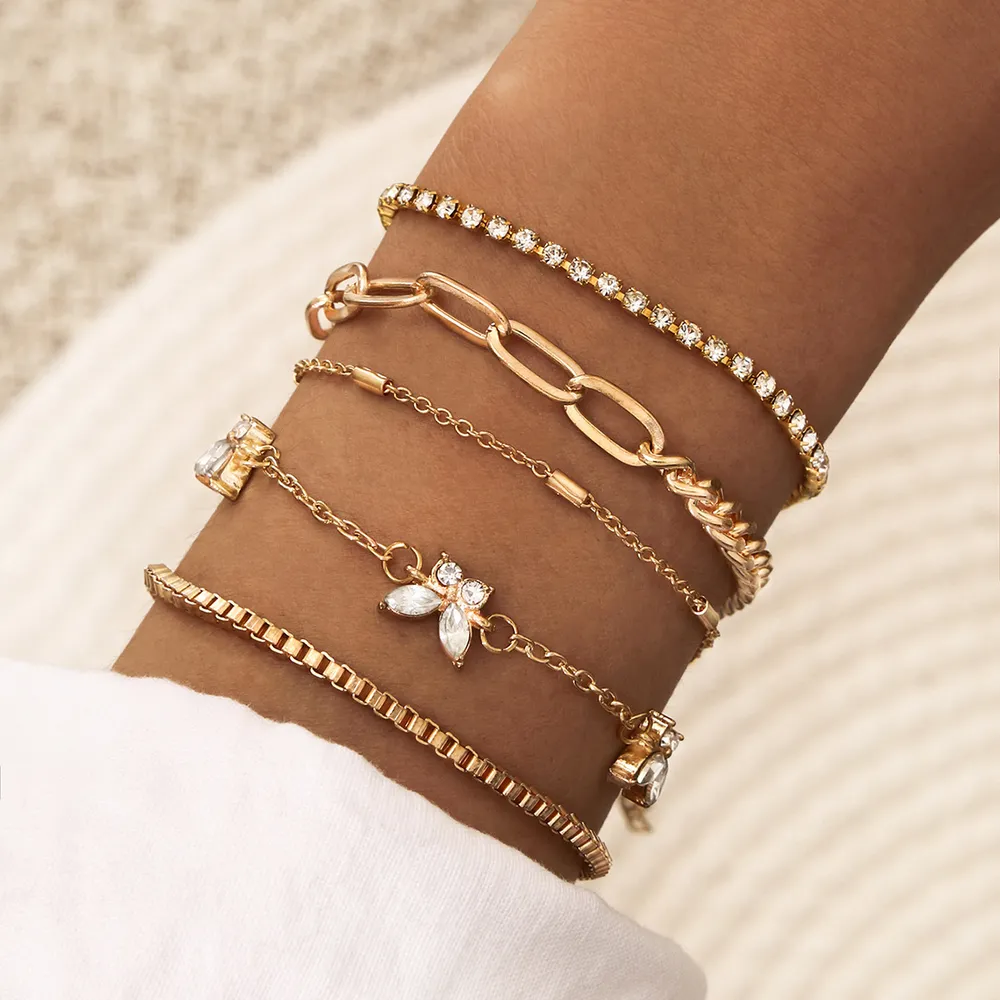
To find your bracelet size, measure around your wrist just below the wrist bone, then add about 0.6–1 in (1.5–2.5 cm). Add less for a snug fit and more for a loose one. A 6.3 in (16 cm) wrist, for example, takes a bracelet of about 6.9 in (17.5 cm) for a snug fit or 7.3 in (18.5 cm) for a loose one.
Below you’ll find the full chart, a step-by-step way to measure at home, how bangles and cuffs are sized differently, and what extenders and stretch cords mean for fit. This guide is part of our jewelry size guide, which also covers necklaces, rings and anklets.
Key Takeaways
- Measure your wrist just below the wrist bone, where a bracelet naturally sits.
- Add about 0.6 in (1.5 cm) for a snug fit or 1 in (2.5 cm) for a loose fit.
- Bangles have no clasp, so size them by your hand, not your wrist: they must slide over your knuckles.
- Extenders, sliding knots and stretch cord make a bracelet fit a range of wrists. Read the full length line in each listing.
- Brilliant Earth puts the average bracelet length at 6.5–7 in for women and 7.5 in for men.
Bracelet size chart
Find your wrist measurement in the first column, then read across to the bracelet length for the fit you like.
| Wrist size | Snug fit | Loose fit |
|---|---|---|
| 5.5 in (14 cm) | 6.1 in (15.5 cm) | 6.5 in (16.5 cm) |
| 5.9 in (15 cm) | 6.5 in (16.5 cm) | 6.9 in (17.5 cm) |
| 6.3 in (16 cm) | 6.9 in (17.5 cm) | 7.3 in (18.5 cm) |
| 6.7 in (17 cm) | 7.3 in (18.5 cm) | 7.7 in (19.5 cm) |
| 7.1 in (18 cm) | 7.7 in (19.5 cm) | 8.1 in (20.5 cm) |
| 7.5 in (19 cm) | 8.1 in (20.5 cm) | 8.5 in (21.5 cm) |
| 7.9 in (20 cm) | 8.5 in (21.5 cm) | 8.9 in (22.5 cm) |
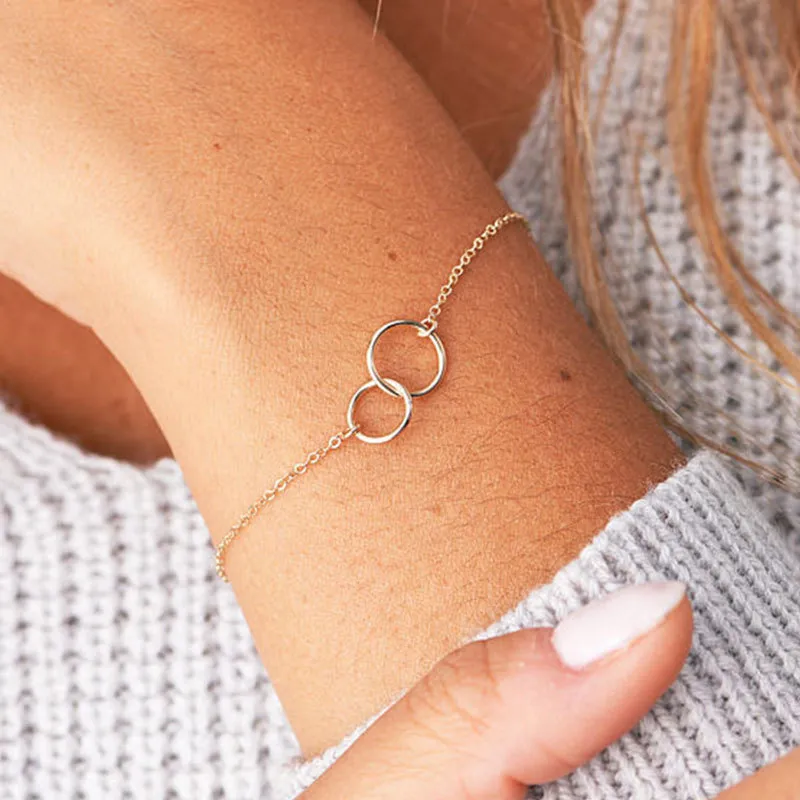
A snug bracelet sits close and moves very little, which suits tennis bracelets and thin chains you want to stay in place. A loose bracelet slides toward your hand, which suits charm bracelets and bangles. Our chart uses about 0.6 in for a snug fit and 1 in for a loose one. The double circle chain bracelet shown here is 6.7 in (17 cm) plus a 2 in (5 cm) extender, so it covers several rows of the chart.
How to measure your wrist for a bracelet
You need a soft tape measure, or a strip of paper and a ruler.
- Find the spot. Measure just below the wrist bone, on the hand side, where a bracelet naturally rests.
- Wrap it snugly. Wrap the tape or paper around your wrist so it lies flat against the skin without squeezing.
- Mark and read. Mark where the end overlaps, then lay the paper flat on a ruler. That number is your wrist size.
- Add room for fit. Add about 0.6 in (1.5 cm) for snug or 1 in (2.5 cm) for loose, or use the chart above.
- Check against a bracelet you own. If you already have one that fits well, lay it flat and measure it end to end, clasp included. That is the most reliable size of all.
Measure the wrist you’ll wear the bracelet on, since the two can differ slightly.
What is the average bracelet size?
Brilliant Earth puts the average bracelet length at 6.5 to 7 inches for women and 7.5 inches for men (updated July 2026).
Our own catalog lines up with that. As of October 2026, 36 of our 102 bracelets list a length. The two most common lengths are 7.1 in (18 cm), on 12 bracelets, and 6.7 in (17 cm), on 10.
Those two lengths fit a wrist of roughly 5.7–6.5 in (14.5–16.5 cm) by the chart above. If your wrist is larger, look for an extender or an adjustable style.
Extenders, sliding knots and stretch cords
Many fashion bracelets are built to fit a range of wrists rather than one exact size.
- Extender chain: a short length of chain beside the clasp that lets you fasten the bracelet at several points. Of our bracelets with a listed length, 19 have one, and 18 of those are 2 in (5 cm).
- Sliding knot or slider bead: common on cord and string bracelets. Pull the ends to tighten, pull the bracelet open to loosen. The adjustable braided cord charm bracelet is listed at 7.1 in (18 cm) and works this way.
- Stretch cord: beads on elastic that roll over the hand, so there is no clasp at all. The 6 mm polymer clay bead stretch bracelet is 6.9 in (17.5 cm) at rest.
- Toggle clasp: a bar that slips through a ring. Toggles need a little extra length so the bar can pass through the ring, so lean toward the loose-fit column.
From Lumi: Readers often ask whether a bracelet can be adjusted, so I check for an extender or sliding knot in every listing I recommend. A 2 in extender makes a big difference: a 6.7 in chain with one fits wrists from about 5.7 in up to about 7.7 in.
How to size bangles and cuffs
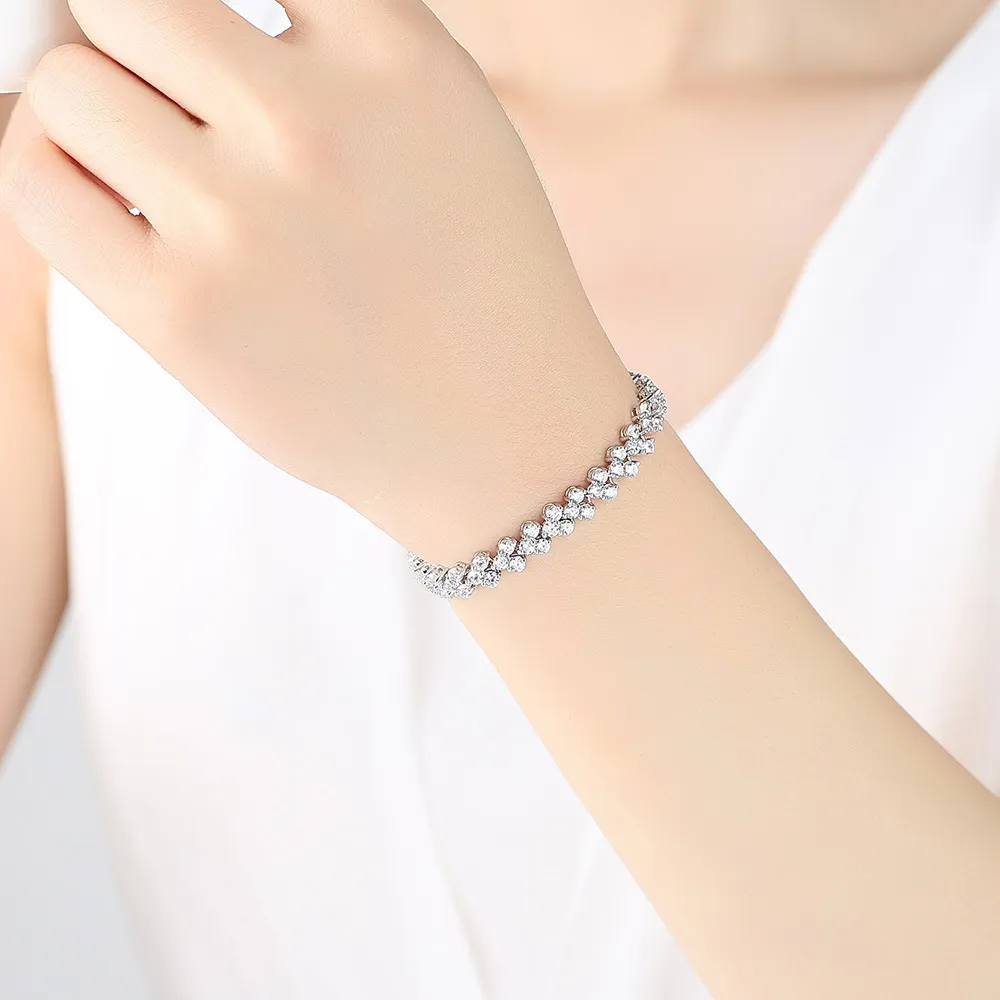
A bangle is a rigid ring with no clasp, so it must slide over your hand. That makes your hand, not your wrist, the measurement that matters.
- Bring your thumb and little finger together, as if you were putting a bangle on.
- Wrap a soft tape around the widest part of your hand, across the knuckles.
- Choose a bangle whose inner circumference is at least that size.
| Inner diameter | Inner circumference |
|---|---|
| 2.13 in (54 mm) | 6.7 in (17.0 cm) |
| 2.20 in (56 mm) | 6.9 in (17.6 cm) |
| 2.28 in (58 mm) | 7.2 in (18.2 cm) |
| 2.36 in (60 mm) | 7.4 in (18.8 cm) |
| 2.44 in (62 mm) | 7.7 in (19.5 cm) |
| 2.52 in (64 mm) | 7.9 in (20.1 cm) |
Hinged bangles open on one side, so they only need to fit your wrist, not your hand. Cuffs are open at the back and can be bent very gently to adjust. Do it slowly and only a little at a time, because thin metal can weaken if you bend it back and forth. Browse bangles and cuffs.
Sizing by bracelet type
| Bracelet type | How to size it |
|---|---|
| Chain bracelet | Wrist size plus 0.6–1 in; check for an extender |
| Beaded stretch bracelet | Close to your wrist size; it stretches over the hand |
| Cord or string bracelet | Usually adjustable with a sliding knot |
| Charm bracelet | Add a little extra so charms hang freely |
| Bangle | Measure your hand across the knuckles |
| Cuff | Bend gently to fit; check the opening width |
| Bracelet set | Check whether the set lists one length for all pieces |
Shop by type: chain bracelets, beaded bracelets and bracelet sets.
Frequently asked questions
What size bracelet should I get for a 6 inch wrist?
About 6.6 in (16.8 cm) for a snug fit or 7 in (17.8 cm) for a loose one. A 6.7 in bracelet with an extender also works well.
Is a 7 inch bracelet small or large?
A 7 in bracelet is a common size for women. It fits a wrist of roughly 6–6.5 in comfortably. On many men it will feel snug, since Brilliant Earth gives 7.5 in as the average men’s bracelet length.
Should a bracelet be tight or loose?
Most people prefer a bracelet that moves a little but doesn’t slide over the hand. As a quick check, you should be able to slip one finger between the bracelet and your wrist.
How do I know my bangle size without a tape measure?
Wrap a strip of paper around the widest part of your hand with your thumb and little finger touching, mark it, and measure the paper with a ruler. Or measure the inside diameter of a bangle you already own.
Measure once, then shop with confidence
Measure just below the wrist bone, add 0.6 in for snug or 1 in for loose, and size bangles by your hand. Then check the full length line, extender included, in each listing. Browse all bracelets, or see the necklace length guide if you’re building a matching set.