How to Layer Necklaces: Lengths, Chains and Necklines

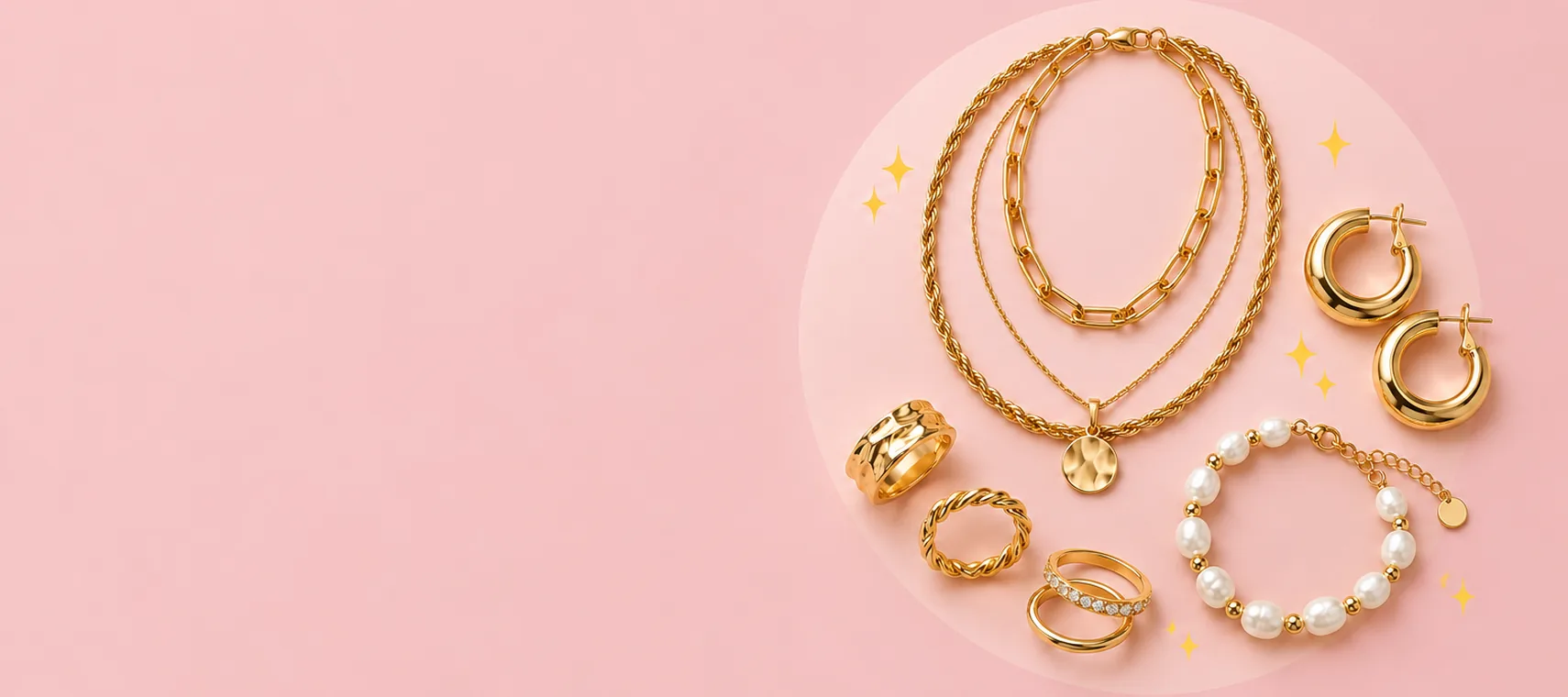
To layer necklaces, start with one piece you want to feature, then add a second that rests clearly above or below it. Check the combination against your neckline before adding more. A short chain and a longer pendant make a useful starting point because you can see each piece without placing both pendants in the same spot.
You can build the look from necklaces you already own or choose a ready-made layered design. Either way, look at where the strands sit, how they fasten and what the listing says you receive. Our necklace length guide explains the standard measurements; the steps below help you put those lengths together.
Key Takeaways
– Choose a focal necklace first, then give the next layer its own space.
– Use your neckline and a mirror to judge placement. A listed chain length cannot show exactly where it will sit on you.
– A ready-made layered necklace can offer a coordinated look, but multiple visible strands do not necessarily mean separate necklaces.
On this page
- Choose a focal necklace
- Create space between layers
- Match your neckline
- Check the look in motion
- Choose a ready-made layered design
Before you begin
Lay out two or three necklaces beside the top you plan to wear. Have a mirror and a soft tape measure ready. Check that each clasp closes and that no chain has an obvious knot or damaged link before putting it on.
Separate necklaces with their own clasps give you freedom to rearrange the look. A ready-made piece gives you a combination to work with as supplied. Neither option needs a large jewelry collection: begin with what fits the outfit, then decide whether something is missing.
Step 1: Choose one necklace to lead the look
Pick the piece you most want to notice when you look in the mirror. It might be a small heart, a coin pendant, a strand of faux pearls or a plain chain with an interesting texture.
Put that necklace on first, with your chosen top. Look at the pendant and the edge of the fabric. If they compete for the same space, try a different length setting or a different top before adding another necklace.
Keep the first combination simple. If the focal piece has a large charm or several decorative details, try a plainer chain for the second layer. If the first necklace is understated, the second can provide more texture or shape. These are styling starting points, rather than rules about what you are allowed to wear.
Check the result from a normal conversational distance, as well as close up. You should be able to tell which detail you chose to feature. If every pendant draws equal attention, remove one piece and compare.
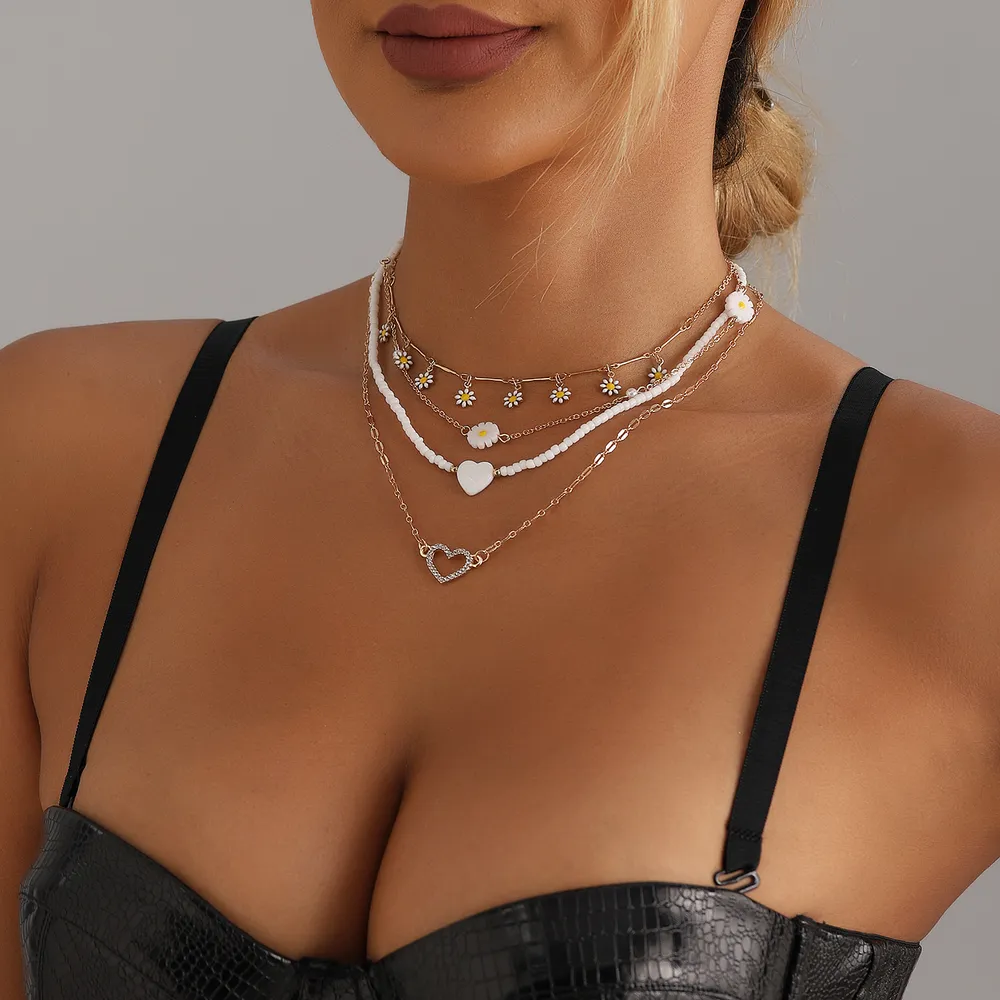
The catalog photograph combines small flower details with heart motifs. Use it to compare a decorative focal design with a simpler chain; the photograph does not confirm detachable layers.
US$2.47 · 1 necklace
View product details
Step 2: Create space between the layers
Choose the second necklace by where it sits on you, rather than by its length label alone. Put it on with the first piece and check whether the chains and pendants remain visually distinct.
A 16-inch (about 40.6 cm) chain paired with an 18-inch (about 45.7 cm) chain is one combination to try, not a guaranteed fit. Neck size, pendant shape, the clasp setting and the top underneath affect the finished arrangement. If the two pieces settle together, try a different setting or a longer second chain. There is no need to buy a particular length just to follow an example.
To compare chains you already own, open each clasp and lay the necklace flat without pulling it taut. Measure along the chain from the clasp to the connecting ring at the other end. Note the usable extender range separately, and measure the pendant’s drop separately from the chain. For a ready-made multi-strand piece, ask how the seller measured it if the listing is unclear. A longer pendant can reach the same area as a lower necklace even when their chains differ in length.
The useful check is a visible gap between the details you want to show. Look straight ahead, then turn slightly. If one pendant hides another, change the combination before adding a third layer.
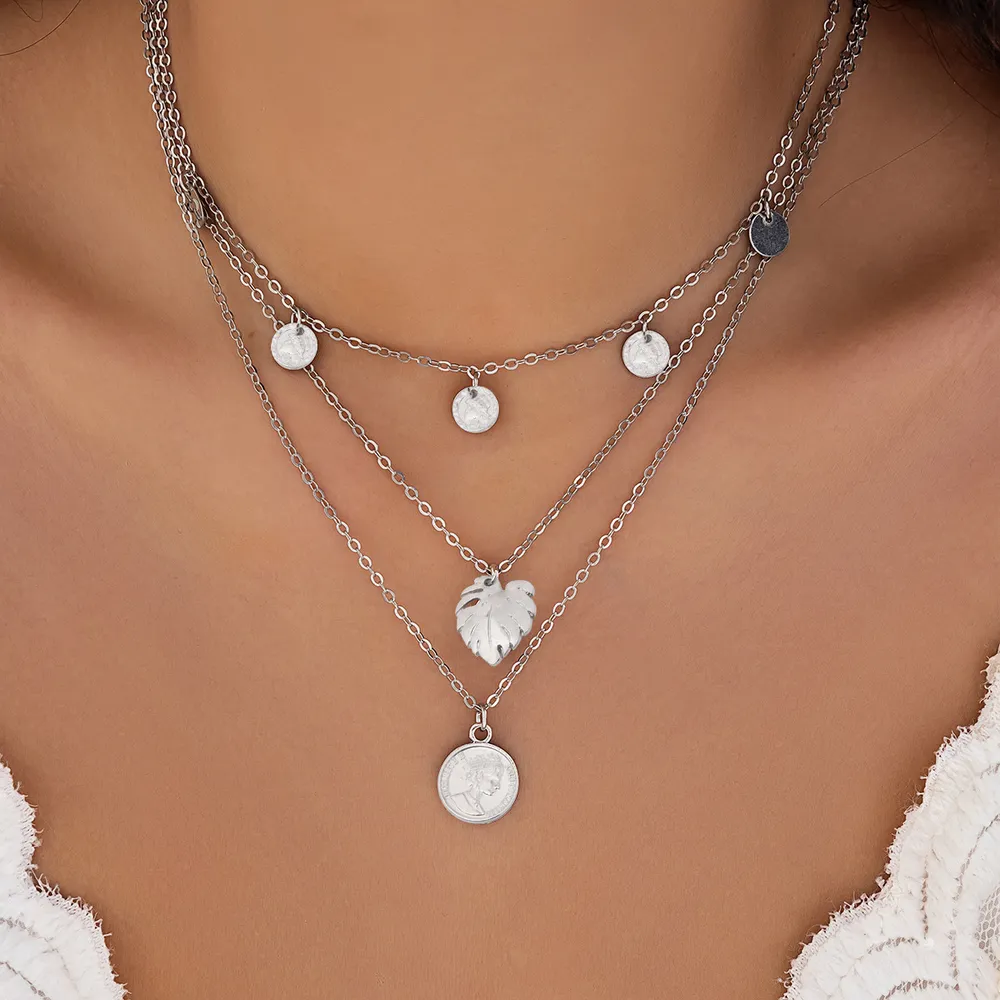
The catalog photograph shows coin and leaf details at distinct levels. Judge the arrangement as a design example, not a measurement of where it will sit on your body.
US$1.30 · 1 necklace
View product details
Step 3: Match the arrangement to your neckline
Try the necklaces with the actual outfit. A combination that looks balanced on a display can land awkwardly against a collar, button or fabric edge.
| Neckline or top | A combination to try | What to check in the mirror |
|---|---|---|
| Open V-neck | A shorter chain with a longer pendant beneath it | Whether the pendant sits inside the opening or catches its edge |
| Crew-neck T-shirt | Distinct lengths that remain visible against the fabric | Whether the shirt hides the upper layer or pushes a pendant aside |
| Open-collar shirt | A short chain with a restrained pendant layer | Whether the collar covers the chain or rubs against a charm |
| High neckline | A longer necklace, with a second layer only if it adds something | Whether the fabric provides enough contrast to see the details |
Treat the table as an outfit exercise. It does not establish a required length for each neckline. Start with one of the combinations, then adjust it to your clothes and comfort.
A patterned top can make small details harder to distinguish. Compare the same necklaces against a plain top before deciding that the jewelry itself needs changing. Sometimes the simplest fix is to keep one necklace and let the outfit provide the rest of the detail.
Step 4: Add contrast in texture or shape
Use one clear difference to distinguish the layers. Try a fine chain with a more defined link, a simple chain with a pendant, or a faux-pearl detail beside a plain metal-colored strand.
Our guide to necklace chain types can help you identify what you already own. You do not need several unfamiliar chain styles to create a layered look. Compare two pieces and ask whether the second adds something you can actually see.
Matching metal colors can make the arrangement feel coordinated. Mixing colors is also a styling option if you like the result. Keep the shapes or spacing simple while you decide whether the color contrast works with the outfit.
Read material information separately from appearance. The FTC’s guide to buying precious-metal jewelry explains distinctions among gold, gold plating and other labels. A gold-colored finish alone does not establish that a necklace is gold or gold plated.
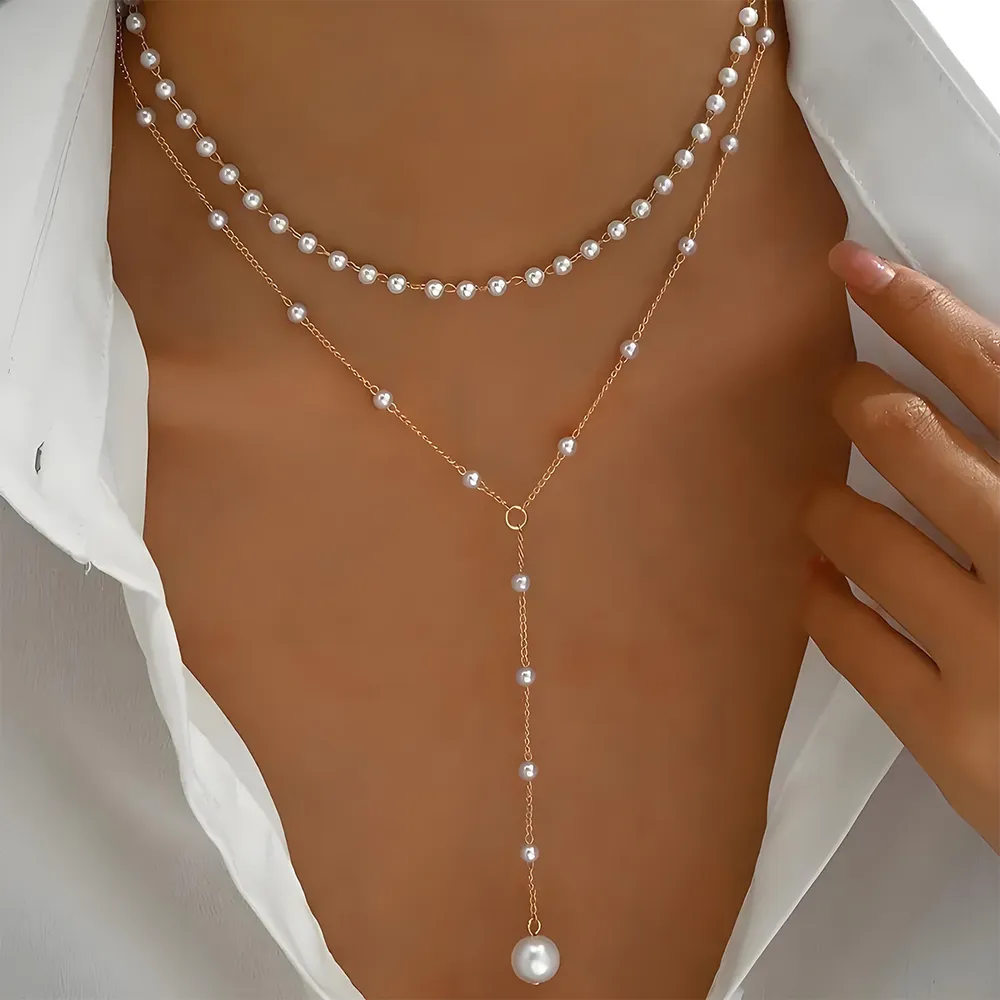
Faux-pearl details and a fine chain create a visible texture contrast. The listing describes one alloy necklace, not two confirmed separate necklaces.
US$1.05 · 1 necklace
View product details
Step 5: Check the necklaces while moving
Move as you would while wearing the outfit. Sit down, turn your head and reach forward. Check whether pendants overlap, a chain pulls, or a charm catches on the fabric.
If the layers keep settling together, try fewer pieces or a different length combination. Avoid forcing an extender onto a clasp that does not fit securely. Changing the arrangement is preferable to wearing a fastening that you cannot close properly.
Layering does not guarantee that chains will stay untangled. A look that sits neatly when you stand still can shift during wear. Use the movement check to choose a comfortable combination, without expecting it to prove how the necklaces will behave all day.
When you take them off, fasten separate necklaces and give them their own storage spaces. GIA’s jewelry-care guidance recommends storage that protects pieces from scratching and damage. Our jewelry storage guide covers practical ways to organize necklaces between wears.
When a ready-made layered necklace makes sense
Choose a ready-made design when you like the arrangement shown and would rather select one coordinated piece than assemble separate necklaces. Check its listed measurements, piece count and fastening details before ordering.
For example, the Double Layer Faux Pearl and Metal Ball Necklace is described in the Dazzlot catalog as an alloy necklace with faux-pearl details, supplied as one necklace. It offers a different visual direction from a chain-and-charm design. That description does not confirm that the layers detach or that they have independent clasps.
Compare those details with a layered coin-and-leaf necklace if you prefer visible charms. Choose by the pictured arrangement and confirmed description, rather than assuming that every design called “layered” is constructed in the same way.
Product-card prices were checked on October 22, 2026, in USD. The live product page and checkout determine the current price and any shipping or taxes. The pictured arrangements are catalog examples, not combinations we physically tested.
Before ordering, check:
- What arrives: one necklace, or multiple independently wearable pieces?
- What adjusts: is a length range or extender actually specified?
- What separates: does the seller explicitly confirm removable layers?
- What it is made from: does the description identify the material, rather than only its color?
Our pre-layered necklaces versus separate sets guide explains that buying distinction in more detail. Neither a front-view photograph nor the word “double” is enough to answer every construction question.
Look after the materials you actually have
Follow the care instructions for the specific necklace. Do not assume that advice for solid gold, natural pearls or sterling silver applies to an alloy piece with a decorative coating or faux pearls.
GIA’s care guidance describes how chemicals, including some cosmetics, can affect precious metals and delicate gems. That is a reason to check material-specific instructions, not evidence that all fashion jewelry reacts identically. Let applied products dry before putting on your necklaces, and remove jewelry before using harsh household cleaners.
The FTC also notes that gold plating eventually wears away, with wear depending on use and plating thickness. Do not treat a plated finish as permanent, or infer a coating’s thickness from a product photograph. If the material description is incomplete, ask for clarification before choosing a cleaning method.
Questions about layering necklaces
How many necklaces should I layer?
Start with two so you can judge the spacing and comfort. Add a third only if it contributes a detail you want to show. Two well-chosen pieces can be the finished outfit; there is no minimum number beyond the layered combination you prefer.
Can I layer two necklaces of the same length?
Try them together, but check where both chains and pendants settle. The same listed chain length does not guarantee identical placement, especially when pendant sizes differ. If the pieces repeatedly overlap, choose a different setting or a different second necklace.
Do I need a necklace separator?
You do not need one to try a layered outfit. Begin by adjusting the pieces you have and checking them in motion. If you consider a separator later, confirm that its attachments suit your clasps; do not assume it will fit every necklace or prevent every tangle.
Can I wear a pendant with a ready-made layered necklace?
You can try it, provided the added necklace sits comfortably and does not hide the design you chose. Check the combined arrangement before buying an extra piece. A ready-made necklace may already supply all the detail the outfit needs.
Choose the combination you will wear
Build the look around one favorite necklace, leave room for the next layer and check both against your neckline. Keep the arrangement comfortable in motion, and verify material and fastening details before buying anything new.
Explore the layered necklace collection when you want a coordinated design, or use your existing pieces to try the steps first.
This AI-assisted guide draws on the product descriptions and sources linked above. Product information was checked on October 22, 2026; the examples are not hands-on wear tests.
For a product-detail question or a suggested correction, contact Dazzlot. You can also read about the store.