Types of Necklace Chains: 14 Styles and How to Choose

The most common types of necklace chains are cable, curb (and its heavier cousin, the Cuban), figaro, rope, box, snake, paperclip, ball (bead) and herringbone, plus a few twisted and woven styles such as Singapore and wheat. Each name describes the shape of the links and how they connect. That shape decides how the chain looks, whether it tangles or kinks, and how much pendant weight it can carry.
This guide shows what each chain type looks like, which ones suit a pendant, and which work best in a layered stack. For how long a chain should be, see our necklace length guide; this page is about style, not length. Both are part of our jewelry size guide.
Key Takeaways
- Cable chains (round or oval links) are the all-rounder: simple, easy to pair with almost any pendant and easy to layer.
- Box, rope and wheat chains are the sturdy choices for a heavier pendant; ball and paperclip chains suit light charms.
- Snake chains resist tangling, but snake, herringbone and other flat chains can kink if they are bent sharply.
- Curb and Cuban chains lie flat; a chunky Cuban is usually worn on its own as a statement.
- In a layered stack, mix different chain types so each strand stays easy to tell apart.
Necklace chain types at a glance
| Chain type | What it looks like | Tangling and kinking | Best for |
|---|---|---|---|
| Cable | Uniform round or oval links | Fine versions tangle more easily | Pendants, layering, everyday |
| Rolo (belcher) | Like cable, but wider, thicker round links | Sturdy | Pendants, charms |
| Curb | Uniform links twisted to lie flat | Lies flat | Everyday wear, layering |
| Cuban | Bold, rounded, interlocking links that lie flat | Heavy and sturdy | Statement, worn alone |
| Figaro | One long link, then two or three short ones | Lies fairly flat | Solo wear or a pendant |
| Rope | Links twisted into a spiral | Flexible | Pendants, daily wear |
| Singapore | A fine, twisted, braided look | Flexible | Light pendants |
| Wheat (spiga) | Four strands of twisted oval links woven together | Less prone to kinking | Pendants or solo |
| Box | Square links forming a smooth square profile | Less prone to kinking; stiffer | Heavier pendants |
| Snake | Curved plates forming a smooth tube | Resists tangling, can kink | Simple pendants |
| Herringbone | Flat, V-shaped segments | Prone to kinks | Solo, close to the neck |
| Paperclip | Long rectangular links | Open links, lightweight | Layering, small charms |
| Ball (bead) | Small metal balls joined by short bars | Light and flexible | Casual looks, dog-tag styles |
| Anchor (mariner) | Oval links with a bar across the middle | Structured | Nautical, everyday |
The descriptions and tangling notes above follow Brilliant Earth’s guide to chain types and Blue Nile’s guide to chain styles, both established jewelers.
Link chains: cable, rolo, curb, Cuban and figaro
Link chains are built from separate links joined one through the next. They are the most common family and the easiest to recognize.
Cable chain
A cable chain is made of round or oval links of the same size, joined in a steady pattern. It is the plain, everyday chain most pendants come on. Blue Nile describes cable chains as “an ideal type of chain necklace for showcasing pendants or wearing on their own.” Brilliant Earth calls them a top choice for layering. A very fine cable chain is light and delicate, so it is also the type most likely to knot when stored loose in a bag.
Rolo (belcher) chain
A rolo chain, also called a belcher chain, uses round links like a cable chain, but each link is wider and thicker. It looks a little bolder and is a common base for charms and pendants.
Curb chain
A curb chain has uniform links that are twisted so they lie flat against the skin. It is a classic for everyday wear and layering.
Cuban chain
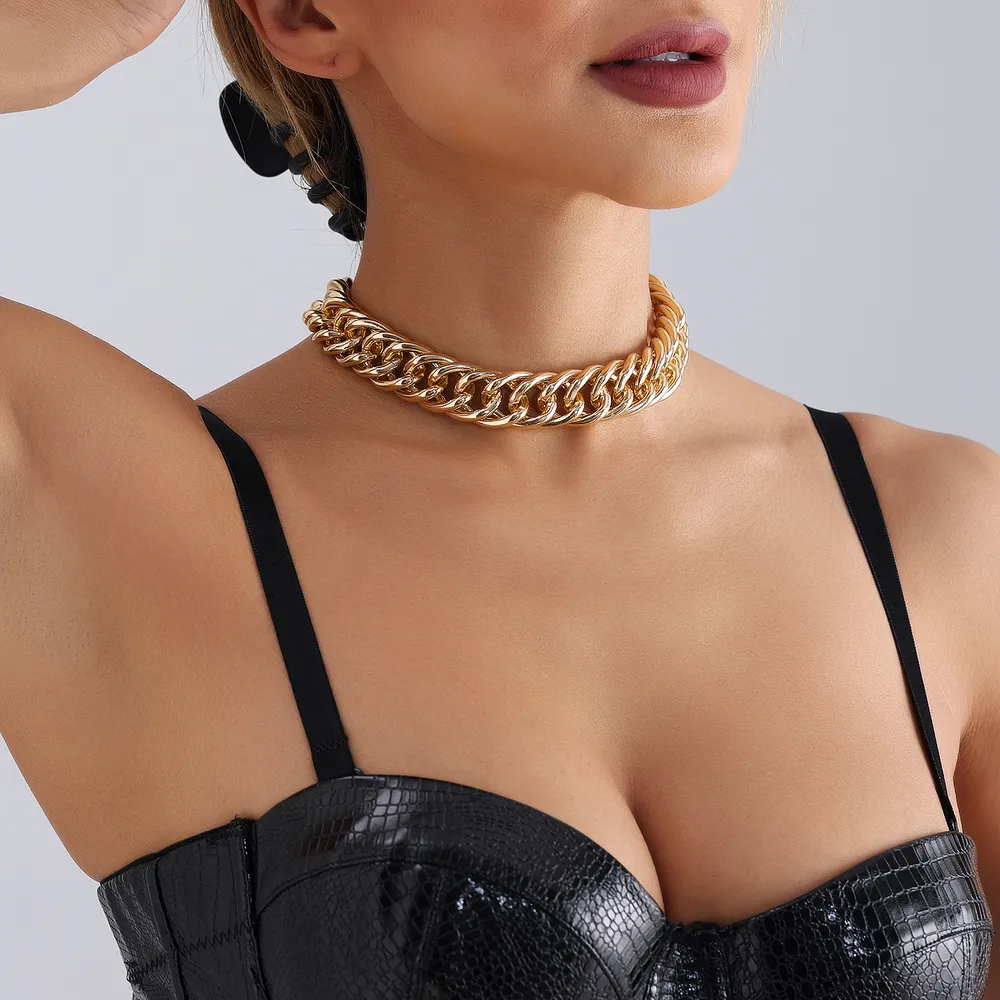
A Cuban chain (often “Cuban link”) is a bolder, heavier relative of the curb. According to Brilliant Earth, its rounded, interlocking links lie flat, and it “may feel too bulky for smaller pendants.” That is why a chunky Cuban is usually worn alone. Several of ours come with a coin pendant or a toggle clasp at the front. Our chunky Cuban link chain necklace is a typical example.
Figaro chain
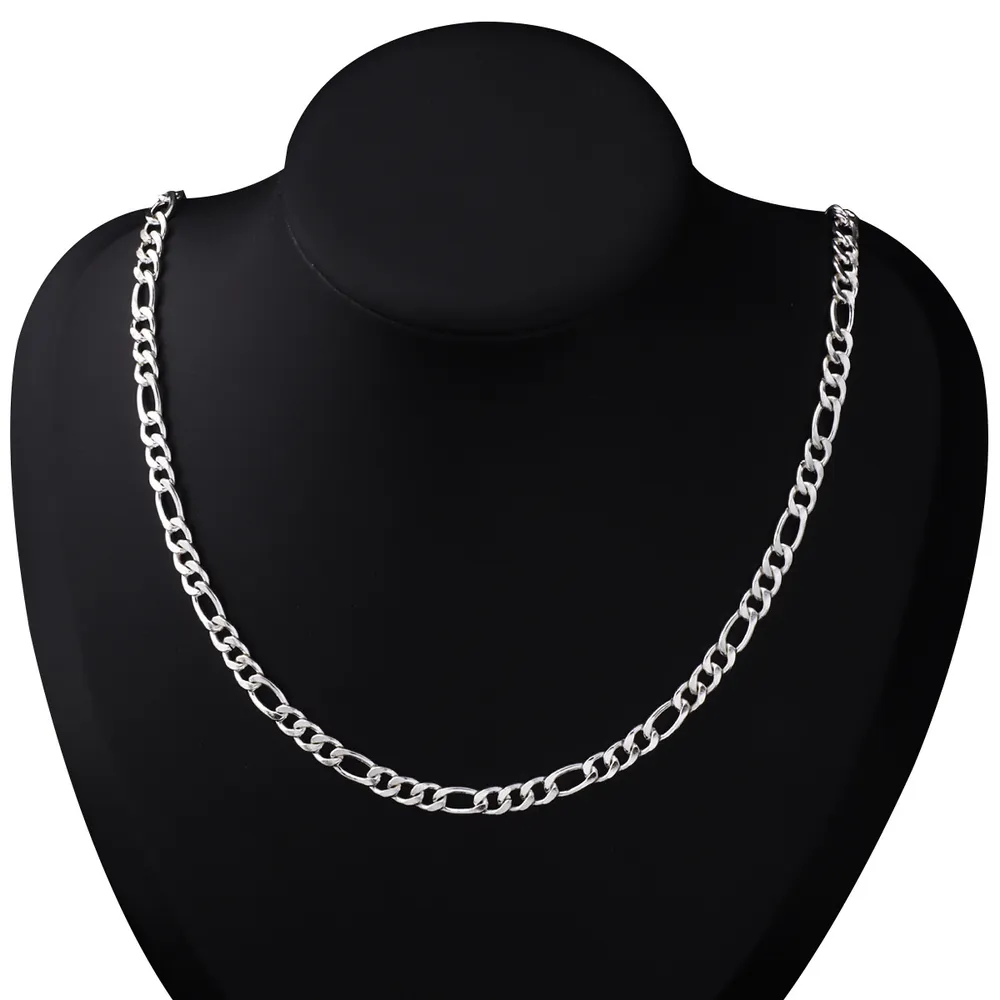
A figaro chain repeats a pattern of one long oval link followed by two or three short links. It reads as a classic, slightly dressy chain, good both on its own and with a pendant. The silver-tone figaro chain necklace shown at the top of this guide has the long-and-short rhythm that makes a figaro easy to spot.
Twisted and woven chains: rope, Singapore and wheat
These chains are made of links twisted or woven together, so they catch the light from many angles.
Rope chain
A rope chain twists its links into a spiral that looks like a rope. Brilliant Earth notes rope chains are “flexible and durable, making them ideal for daily wear and pendants,” though thick versions can feel heavy on the neck.
Singapore chain
A Singapore chain is a finer twisted chain with a braided, sparkly look. It is flexible and drapes softly. Brilliant Earth recommends it for lightweight pendants rather than heavy ones.
Wheat (spiga) chain
A wheat chain weaves four strands of twisted oval links into a pattern that looks like an ear of wheat. It is flexible and strong, works with or without a pendant, and is listed by Brilliant Earth among the chains less prone to kinking.
Smooth and flat chains: box, snake and herringbone
These chains have closely set links or plates, so they look sleek and almost solid.
Box chain
A box chain is made of square links that form a smooth, square profile. Box chains are known for strength, and both Blue Nile and Brilliant Earth say they are often chosen for heavier pendants. The trade-off is that they feel a little stiffer than round-link chains. A fine box chain, like the one on our dainty seashell pendant necklace, is a neat everyday base for a small pendant.
Snake chain
A snake chain is built from tightly joined curved plates that form a smooth, flexible tube, a little like snakeskin. It resists tangling and pairs well with simple pendants. The weakness is kinking: bend it sharply and it can crease, and a crease is hard to repair.
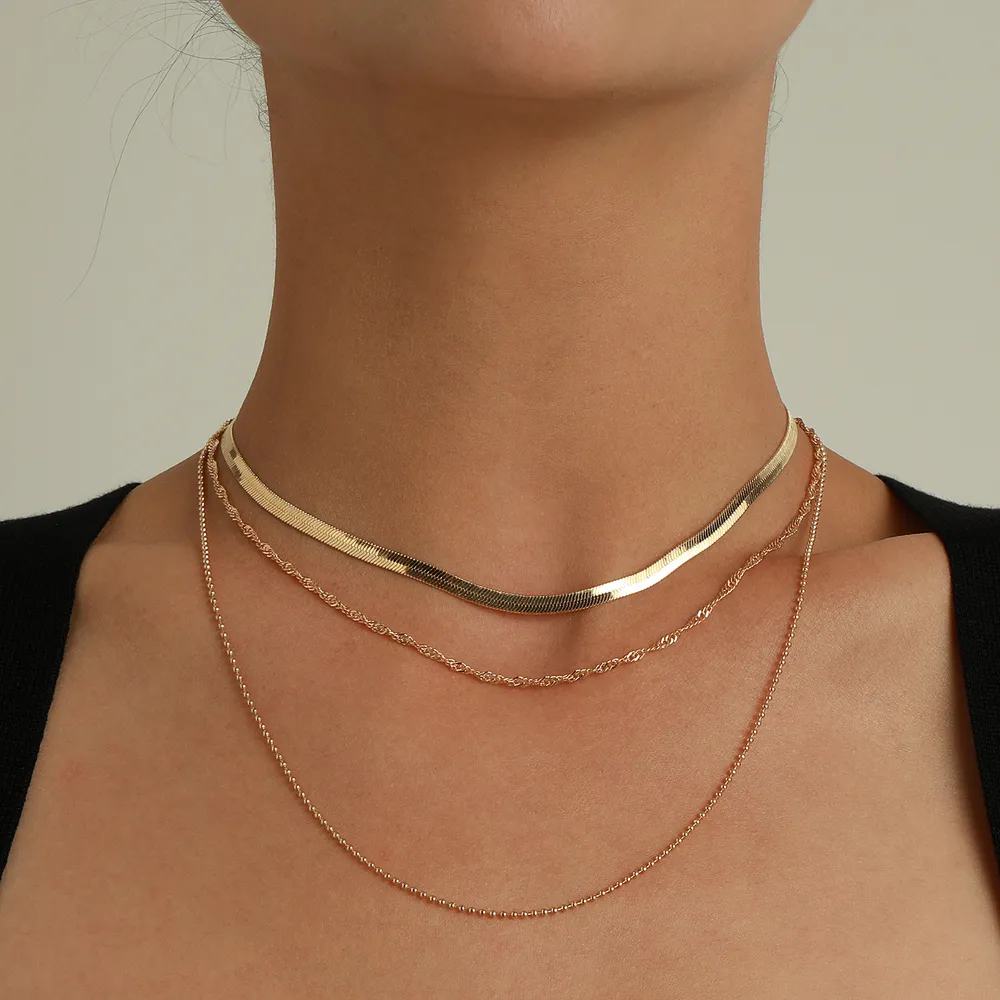
Some fashion listings also use “flat snake chain” for a wide, flat, smooth chain, like the top layer in the photo above. That style looks similar to herringbone and needs the same care.
Herringbone chain
A herringbone chain is made of thin, flat segments set in a V-shaped pattern. It lies flat and smooth, and it looks best close to the neck. Brilliant Earth warns it is “prone to kinks and should not be twisted or bent,” so it is a chain to wear on its own rather than under a heavy pendant.
Open and novelty chains: paperclip, ball, anchor and bamboo
Paperclip chain
A paperclip chain has long, rectangular links that look like a row of paper clips. It is light and modern, and it works well for layering or with small to medium charms. Very heavy charms are not a good match.
Ball (bead) chain
A ball chain, also called a bead chain, links small metal balls with short bars. It is the classic dog-tag chain: light, flexible and casual. It is less suited to a heavy pendant. In the layered necklace above, the ball chain is the lowest strand.
Anchor (mariner) chain
An anchor chain uses oval links with a bar across the center of each link, like a ship’s anchor chain. It looks structured and balanced, and it suits nautical and everyday styles.
Bamboo chain
A bamboo chain has segmented links that look like stalks of bamboo. It is a bolder, more decorative fashion style, usually worn as a statement piece.
Which chain types do we stock?
As of October 2026, our catalog lists 396 necklaces. Most listings describe the pendant or the style rather than the chain, so we only counted listings whose product name or description names the chain type:
- Snake chain: 14 (including flat and twisted snake chains)
- Ball or bead chain: 8
- Cuban chain: 4
- Paperclip chain: 2
- Twist chain: 2
- Box, figaro and bamboo chain: 1 each
Snake chains are the most often named chain type in our listings. For any other piece, look at the close-up photos to check the links. Browse chain necklaces to compare styles side by side.
From Lumi: When a listing names a chain type, I still zoom into the photos before I trust it. If the links in the close-up don’t match the name, the photo is the better guide, and I’d rather a reader know that before ordering.
How to choose a necklace chain
- Start with the pendant. A heavier pendant needs a sturdier chain such as box, rope, wheat or rolo. A small, light charm can hang from a fine cable, paperclip or ball chain. Browse pendant necklaces with the chain already attached.
- Check the bail. The loop at the top of the pendant has to fit over the chain. Chunky Cuban and wide herringbone chains often won’t pass through a small bail.
- Decide how you’ll wear it. A chain worn alone can be bold: Cuban, herringbone or figaro. A chain under a pendant should be quieter: cable, box or snake.
- For layering, mix types. Pair a flat chain with a twisted one and a beaded one, as in the photo above, so each strand stays distinct. Our layered necklaces come pre-styled this way, and the necklace length guide explains how far apart to space each layer.
- Think about care. If you hate untangling chains, avoid storing very fine cable chains loose. If you tend to toss necklaces in a bag, skip herringbone and flat snake chains, which kink. Our guide on how to store jewelry covers ways to keep chains apart.
Most fashion chains, including ours, are made of base metal alloy with a gold-tone or silver-tone finish, so chain type and material are separate choices. If you are comparing finishes, our guide to gold plated vs gold filled explains what each label means.
Frequently asked questions
What is the strongest type of necklace chain?
Among common styles, box, rope, wheat and Franco chains are usually described as the sturdiest, and Cuban chains are heavy and durable. Strength also depends on the thickness of the links and the metal, so a thick chain of any type is stronger than a very fine one.
Which necklace chain doesn’t tangle?
Snake chains resist tangling because their smooth, closely set plates have no open links to catch on each other. Byzantine and Franco chains are also described as resistant. Fine cable and ball chains are the most likely to knot if stored loose.
What is the best chain for a pendant?
A cable chain suits most light and medium pendants. For a heavier pendant, choose a box, rope, wheat or rolo chain. Snake chains pair well with simple pendants, while paperclip and ball chains are best kept for small charms.
What is the difference between a curb chain and a Cuban chain?
Both have links that lie flat. Brilliant Earth describes the curb as similar to the Cuban but generally lighter, so a Cuban is the bolder, heavier version and a curb is easier to layer.
What chain type is best for layering necklaces?
Cable, curb and paperclip chains layer well. The best stacks mix types, such as one flat, one twisted and one beaded chain, so the strands don’t blend together.
Find your chain
Pick the chain type for the pendant and look you want, then check the length in each listing. Browse all chain necklaces, short choker necklaces, or every necklace by style. For length, ring, bracelet and anklet sizing, go back to the jewelry size guide.