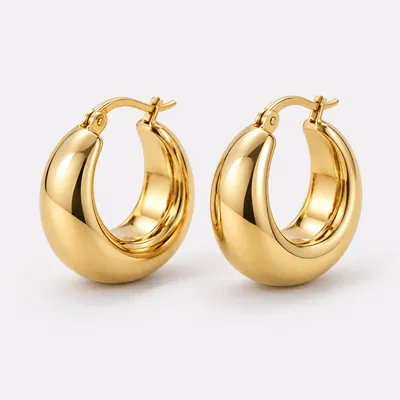
How to Clean Gold Plated Jewelry Without Wearing It Off

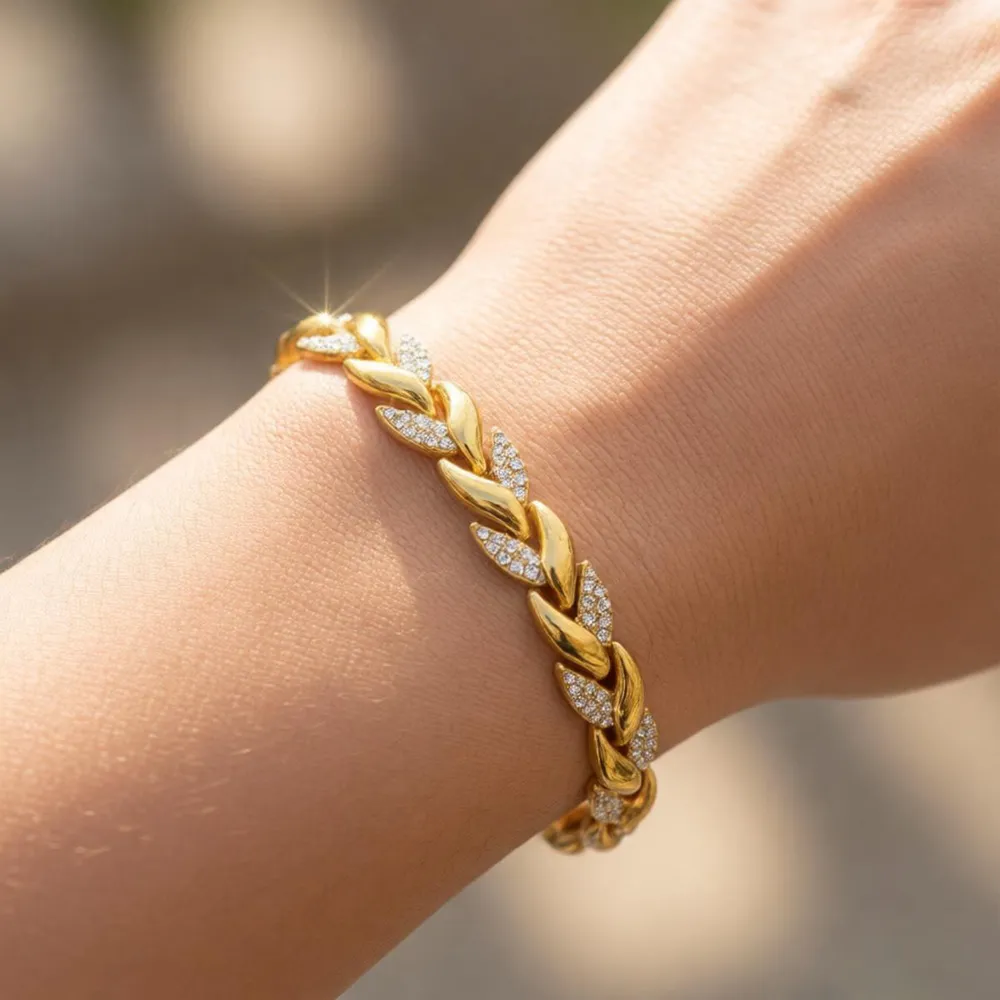
To clean gold plated jewelry, dip it briefly in lukewarm water with a drop of mild dish soap, wipe it gently with a soft cloth, rinse, and dry it straight away. That’s all it needs. The gold layer on plated jewelry is very thin, so anything that scrubs, polishes or dissolves (toothpaste, baking soda, jewelry dips, abrasive polishing cloths, ultrasonic cleaners) can remove the color you’re trying to brighten.
This guide covers the step-by-step method, what never to use, how to handle pieces with glued rhinestones or faux pearls, how to clean fake (costume) jewelry in general, and how often to do it. If you’re cleaning earrings, the posts and backs need a little extra attention, which we cover in how to clean earrings.
Key Takeaways
- Lukewarm water, one drop of mild dish soap and a soft cloth are all gold plated jewelry needs. Dry it fully right after.
- Plating can be as thin as 0.175 microns and still be sold as “gold electroplate” under FTC guidance, so treat the surface as fragile.
- Never use toothpaste, baking soda, bleach, jewelry dips, abrasive polishing cloths or ultrasonic cleaners on plated pieces.
- Pieces with glued rhinestones or faux pearls should be wiped with a damp cloth, not soaked.
- A dry wipe after each wear does more for the finish than an occasional deep clean.
Why gold plated jewelry needs gentle cleaning
Gold plated jewelry is a base metal (often brass or a zinc alloy) with a thin layer of gold deposited on the surface by electroplating. Under the Federal Trade Commission’s Guides for the Jewelry Industry, a piece can be called “gold electroplate” with gold just 0.175 microns thick, about 7 millionths of an inch, and “heavy gold electroplate” starts at 2.5 microns (16 CFR § 23.3). Either way, the gold is far thinner than a sheet of paper.
That changes how you clean it. With solid gold, polishing removes a little metal and reveals more gold underneath. With plating, polishing removes the gold itself, and what’s underneath is a different color. An Associated Press jewelry care guide puts it simply: on gold-plated pieces, the gold layer “can wear off with friction or exposure to soaps and chemicals” (Associated Press via News Tribune, May 2025). The goal is to lift skin oil, lotion and dust off the surface without rubbing the surface away.
| Cleaning method | Safe for gold plated? | Why |
|---|---|---|
| Lukewarm water + mild dish soap | Yes | Lifts oil and residue without abrasion |
| Soft microfiber or lint-free cloth | Yes | Dries and buffs without scratching |
| Soft, baby-size toothbrush, very light pressure | Only for crevices | Use sparingly on textured or chain areas |
| Toothpaste or baking soda paste | No | Both are abrasive and can rub off plating |
| Silver polishing cloth or abrasive jewelry cloth | No | Made to remove a layer of metal |
| Jewelry dip or chemical cleaner | No | Formulated for solid metal; can strip finishes |
| Bleach, ammonia, chlorine | No | Harsh chemicals attack plating and base metal |
| Ultrasonic cleaner | No | Vibration can loosen glued stones and stress thin plating |
How to clean gold plated jewelry in 5 steps
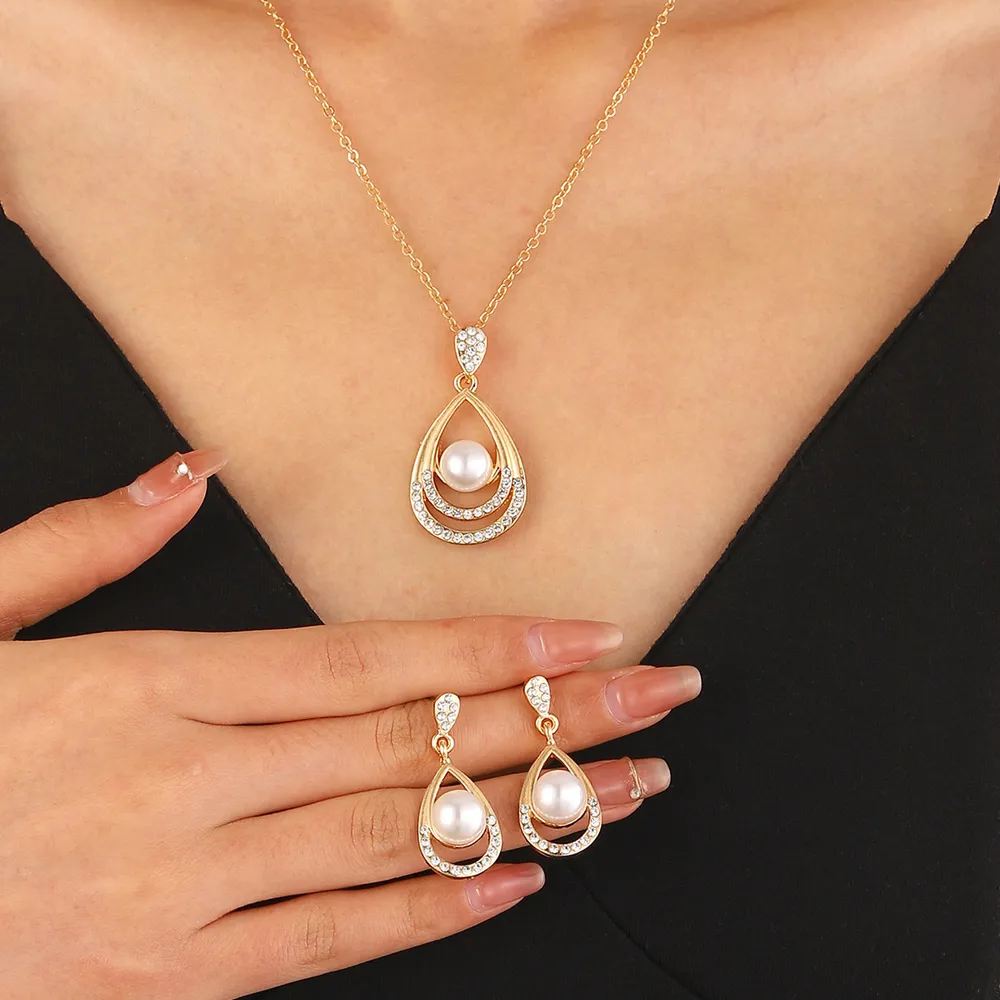
This method works for gold plated and gold-tone necklaces, bracelets, rings and anklets. If your piece has glued stones or faux pearls, like the faux pearl teardrop necklace and earrings set above, skip step 2 and use the damp-cloth method in the next section.
- Mix a mild cleaning bath. Fill a small bowl with lukewarm water and add one drop of mild, unscented dish soap. The AP guide recommends exactly this: “a lukewarm water bath with a drop of mild dish soap.” Avoid hot water, which can soften glue.
- Dip briefly. Lay plain metal pieces in the water for a minute or two to loosen oil and lotion. Short is better; plated pieces don’t benefit from a long soak.
- Wipe, don’t scrub. Hold the piece and wipe it with a soft cloth dampened in the soapy water. For chains or textured links, a soft toothbrush with almost no pressure can reach the gaps.
- Rinse in clean water. Use a second bowl of lukewarm water rather than an open tap, so a small charm or clasp can’t go down the drain.
- Dry immediately. Pat the piece with a soft, lint-free cloth, then lay it on a dry towel to air-dry before storing. We suggest leaving chains and clasps for about an hour, since water trapped in links and hinges is what dulls a finish over time.
Once a piece is dry, store it on its own so it doesn’t rub against harder metal. Our guide to how to keep jewelry from tarnishing covers storage and humidity in more detail.
Pieces with rhinestones, faux pearls or enamel
Many fashion pieces mix plating with glued-in stones, faux pearls or enamel, and these need even less water than plain metal. Water that seeps under a glued stone weakens the adhesive and can cloud the foil backing that makes rhinestones sparkle, and the pearly coating on a faux pearl sits on the surface of a glass or plastic bead.
This applies to a large share of fashion jewelry. As of October 2026, 377 of the 932 alloy products in our catalog list rhinestones, faux pearls, crystals, cubic zirconia or enamel among their details, so we write our own care advice with these pieces in mind.
For these pieces:
- Don’t soak. Dip a cotton swab or the corner of a soft cloth in the soapy water, squeeze it almost dry, and work around each stone.
- Wipe faux pearls with a damp cloth only, then dry them. Keep alcohol, perfume and hairspray off them.
- Dry face down on a towel so any water drains out of the settings instead of collecting behind the stones.
- Check for loose stones before and after. Clean over a bowl or a towel so a stone that pops out is easy to find.
How to clean fake jewelry and costume jewelry
“Fake” or costume jewelry usually means a base metal or alloy with a gold-tone or silver-tone finish, often combined with glass, acrylic or resin stones. Clean it exactly as you would gold plated jewelry: the same mild soap, the same light touch, the same quick drying. Even when a listing doesn’t say “plated,” treat any colored metal finish as a thin coating.
A few extra points for costume pieces:
- Fabric, cord and leather parts: keep them dry. Wipe only the metal sections with a damp cloth.
- Acrylic and resin beads: a damp cloth is enough. Solvents such as nail polish remover can cloud or soften plastics.
- Antique or darkened finishes: don’t try to brighten them. The dark color in the recesses is part of the design, and a dip or polish will strip it.
- Already worn spots: if the base metal is showing through, cleaning won’t bring the gold color back. Clean gently and accept the patina, or retire the piece.
From Lumi: Before I write care notes for a product, I check what the listing actually says about its materials and stones. If it lists alloy with rhinestones or faux pearls, the advice is always the gentle version: damp cloth, no soaking, dry right away. I won’t promise a finish lasts forever, because plating wears with use, and that’s normal.
What not to use on gold plated jewelry
Some popular cleaning hacks are fine for solid gold or sterling silver but remove plating:
- Toothpaste and baking soda. Both are mild abrasives. On a plated piece, the layer they scratch away is the gold. The AP guide also advises steering clear of abrasive cleaners in general.
- Polishing cloths with abrasive or chemical treatment. A jewelry designer quoted by Healthline says Sunshine polishing cloths “are not good for plated jewelry” because “they can remove the plating” (Healthline, medically reviewed August 2020). A plain, untreated microfiber cloth is the better choice.
- Jewelry dips and liquid cleaners. Dips are formulated to dissolve tarnish on solid metal. Unless the label says it’s made for plated or costume jewelry, leave it on the shelf.
- Bleach, ammonia and chlorine. Household cleaners and pool water attack both the plating and the base metal. Take jewelry off before cleaning the house or swimming.
- Ultrasonic cleaners. They work by vibration, which is great for solid metal and hard stones but can shake glued stones loose and isn’t worth the risk on thin plating.
- Vinegar, lemon juice or long alcohol soaks. Acids and solvents can dull a finish and loosen glue.
- Hard scrubbing. Even with soap and water, pressure is what wears plating. Let the soap do the work.
How often should you clean gold plated jewelry?
We suggest a dry wipe with a soft cloth every time you take a piece off, and a gentle soap-and-water clean about every two to four weeks for pieces you wear often. Clean sooner if a piece looks cloudy or feels sticky from lotion or sunscreen. Pieces you rarely wear only need cleaning before you store them for a long time.
The habits around cleaning matter just as much:
- Put jewelry on last (after lotion, perfume and hairspray) and take it off first.
- Remove it before showering, swimming or exercising. The AP guide notes that gold-plated pieces shouldn’t be worn in the shower, unlike solid gold.
- Store pieces separately in a small bag or lined compartment, so they don’t scratch each other.
Wondering whether the color will change over time? Our guide to whether gold plated jewelry tarnishes explains why plated pieces fade or darken and what speeds it up.
Gold plated jewelry cleaning FAQs
Can you clean gold plated jewelry with soap and water?
Yes. Lukewarm water with a drop of mild dish soap is the safest method for gold plated jewelry. Keep the dip short, wipe instead of scrubbing, rinse, and dry the piece completely.
Can I use toothpaste to clean gold plated jewelry?
No. Toothpaste is abrasive and can rub off the thin gold layer. Baking soda has the same problem.
How do you make gold plated jewelry shiny again?
Clean it with soap and water, dry it well, and buff it lightly with a soft, untreated microfiber cloth. If the dullness is because the base metal is showing through, cleaning can’t restore the gold color. Ask a jeweler whether the piece can be re-plated.
Is it safe to put fake jewelry in an ultrasonic cleaner?
We don’t recommend it. Costume pieces often have glued stones and thin finishes, and the vibration can loosen stones or wear the surface.
Can I clean gold plated jewelry with rubbing alcohol?
A quick wipe on a plain metal clasp is fine, but don’t soak plated jewelry in alcohol, and keep it away from glued stones, faux pearls and enamel.
The short routine
Wipe after wearing, wash gently with lukewarm water and mild soap every few weeks, dry right away, and store each piece on its own. Skip abrasives, dips and ultrasonic cleaners. That routine suits every gold-tone piece in our chain and link bracelets, necklaces and jewelry sets. To understand what’s under the gold color, read what alloy jewelry is, or compare finishes in gold plated vs gold filled.