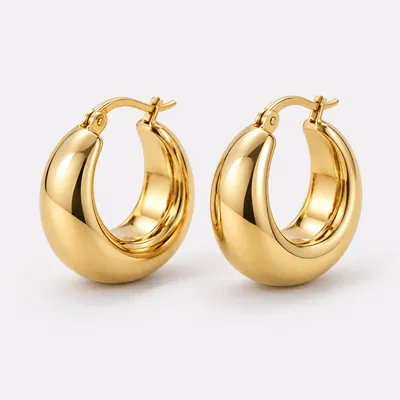
Gold Plated vs Gold Filled: What’s the Difference?

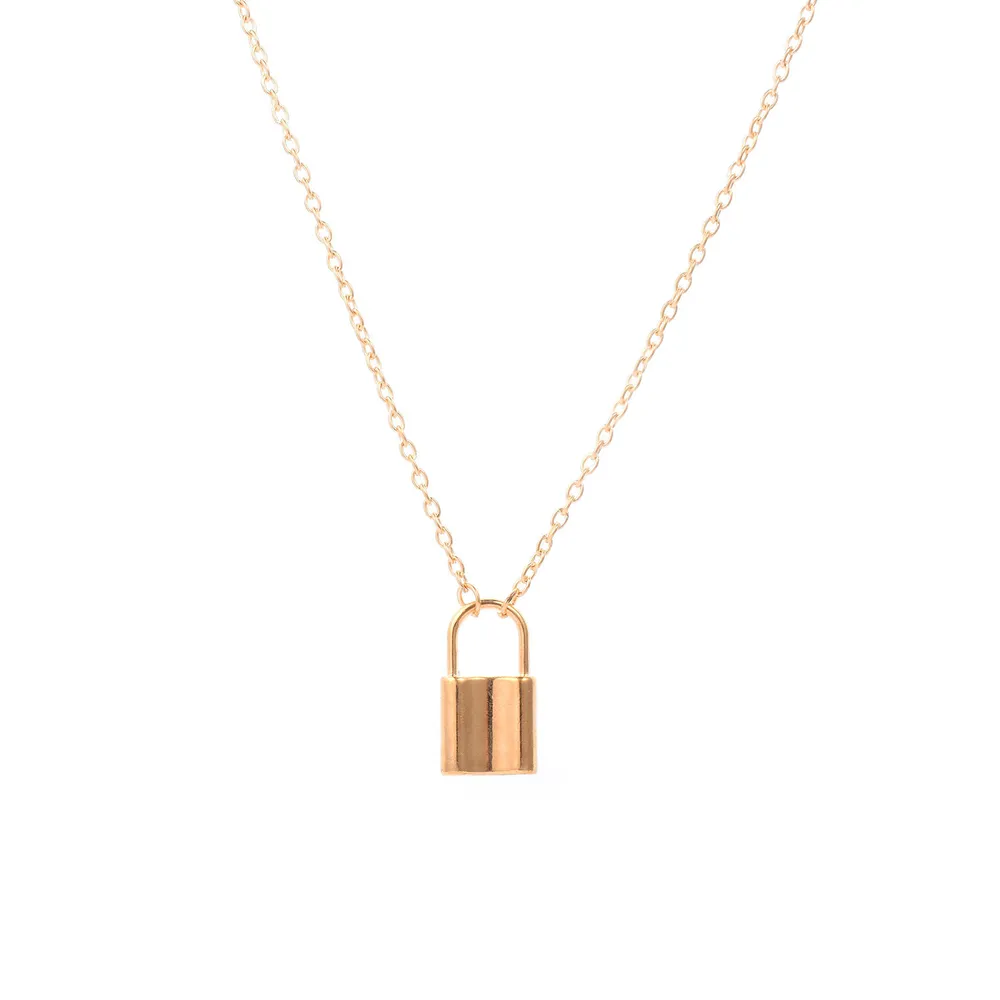
Gold filled jewelry has far more gold than gold plated jewelry. In the US, “gold filled” means a layer of at least 10 karat gold mechanically bonded (usually with heat and pressure) to a base metal, making up at least 1/20 of the item’s total metal weight. “Gold plated” usually means a much thinner layer of gold applied by electroplating. So gold filled lasts much longer with daily wear and costs more, while gold plated is cheaper but the color wears through sooner.
This guide explains each term using the Federal Trade Commission’s definitions, compares them with vermeil, solid gold and gold-tone fashion jewelry, and shows how to tell them apart when you shop. For day-to-day care, see our guide on how to clean earrings, which applies to most plated and gold-tone pieces.
Key Takeaways
- Gold filled: at least 10K gold, mechanically bonded, and at least 1/20 of the item’s metal weight. Often stamped “1/20 14K GF”.
- Gold plated (or gold electroplate): at least 10K gold and at least 0.175 microns thick under FTC guidance, with the karat shown before the term. “Heavy gold electroplate” means at least 2.5 microns.
- Vermeil: sterling silver coated with at least 10K gold, at least 2.5 microns thick.
- “18K gold plated” describes the plating, not the piece. The base underneath is usually brass or another base metal.
- Gold-tone jewelry makes no gold claim at all. It is a gold color, not a gold content.
Gold plated vs gold filled at a glance
| Gold plated | Gold filled | Gold vermeil | Solid gold | Gold-tone | |
|---|---|---|---|---|---|
| What’s underneath | Base metal (often brass) | Base metal (often brass) | Sterling silver | Gold alloy throughout | Base metal alloy |
| How the color is applied | Electroplating | Mechanically bonded gold layer | Gold plating | Gold all the way through | Gold-colored finish, no gold claimed |
| Gold required (US) | 10K+, 0.175 microns+ to be marked “gold plated” or “gold electroplate” | 10K+, at least 1/20 of metal weight | 10K+, 2.5 microns+ | Karat stamp (10K, 14K, 18K) | None claimed |
| How long the color lasts | Shortest | Many years with care | Longer than standard plating | Permanent | Varies; treat like plating |
| Price | Low | Middle | Middle | High | Lowest |
What does gold plated mean?
Gold plated jewelry has a thin coat of gold on a base metal such as brass or copper, applied by electroplating: the piece sits in a solution with gold, and an electric current deposits a layer on the surface.
The FTC’s Guides for the Jewelry Industry say an electroplating of at least 10 karat gold that is at least 0.175 microns thick throughout may be marked “gold plate,” “gold plated” or “gold electroplate,” with the karat shown just before the term, for example “14K gold plated.” “Heavy gold electroplate” needs at least 2.5 microns (16 CFR § 23.3). Many fashion listings say “gold plated” with no karat or thickness at all, so the phrase on its own tells you little about how much gold is there. A micron is a thousandth of a millimeter, so even heavy plating is very thin. That is why plated jewelry eventually shows the base metal where it rubs most: the back of a ring, the clasp of a necklace or the post of an earring.
What does “18K gold plated” mean? The 18K describes the gold in the plating, not the item. An “18K gold plated” bracelet is a base-metal bracelet with a thin layer of 18 karat gold on top. It is not 18K gold jewelry.
What does gold filled mean?
Gold filled jewelry is made by bonding a thick sheet of gold alloy to a base metal core with heat and pressure, then shaping it into wire or sheet. Under the FTC guides, the gold layer must be at least 10 karat and must be applied by a mechanical process, which in practice usually means heat and pressure. When it makes up at least 1/20 of the weight of all the metal in the item, it can be called “gold filled” (16 CFR § 23.3).
You will often see it stamped as “1/20 14K GF”: one-twentieth of the weight is 14 karat gold. Lighter layers are sold as “rolled gold plate” with the fraction shown, for example “1/40 12K RGP”.
Because the gold layer is many times thicker than electroplating, gold filled jewelry can be worn daily for years before the base metal shows. It is also harder to find in very low-cost trend styles, since the material costs more.
What about gold vermeil?
Vermeil (pronounced “ver-may”) is gold over sterling silver instead of a base metal. Under the FTC guides, a piece can be called vermeil only if the sterling silver is coated with gold of at least 10 karat and at least 2.5 microns thick (16 CFR § 23.4). If a base metal layer such as nickel sits between the silver and the gold, that must be disclosed. Vermeil generally holds up better than standard plating, and the silver underneath has value of its own.
Solid gold
Solid gold is gold alloy all the way through, marked by karat: 10K, 14K or 18K. Higher karat means more gold and a deeper color but a softer metal. Nothing wears off, because there is no coating.
Gold-tone: what most fashion jewelry is
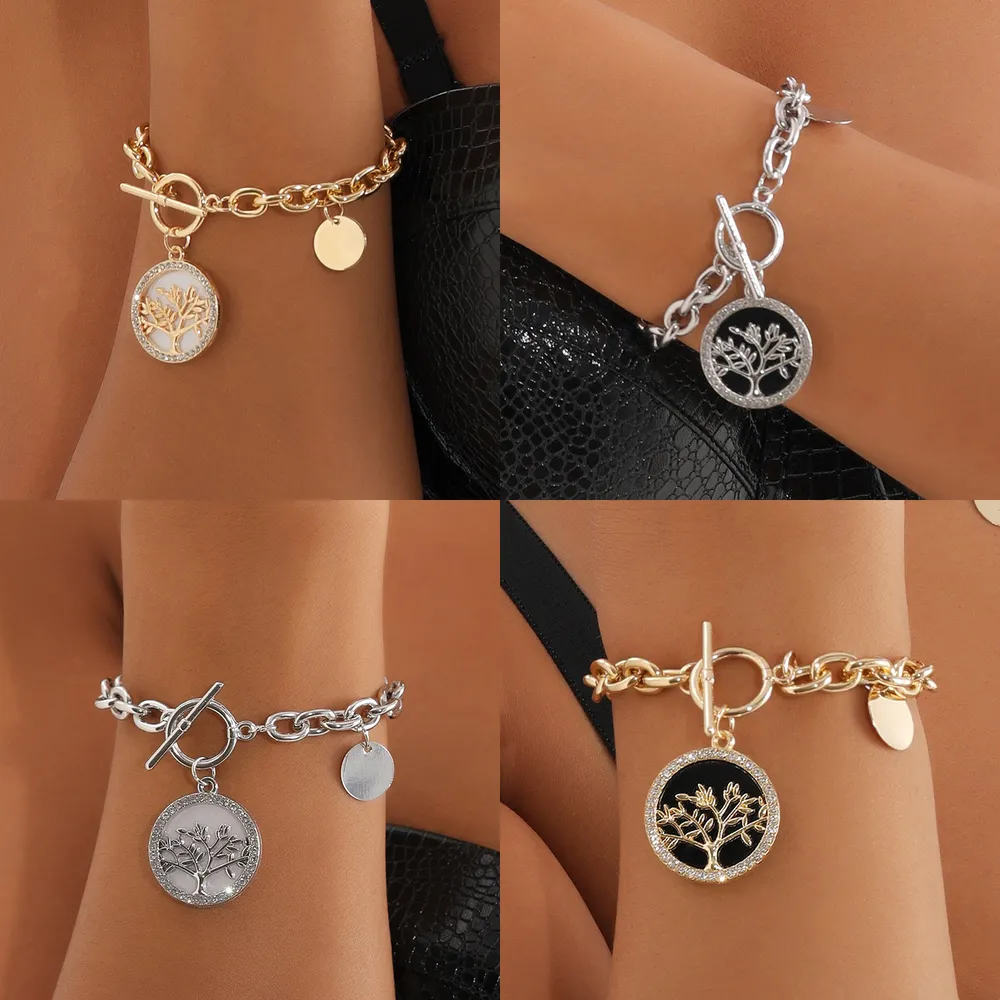
“Gold-tone” or “gold color” describes how a piece looks, not what it contains. It makes no claim about gold content or plating thickness. Most low-cost fashion jewelry is sold this way: an alloy base with a gold-colored finish.
That is how we describe our own jewelry. As of October 2026, 488 of our 1,037 products come in a gold color option (listed as “Gold”), and none of our published product titles or descriptions call a piece “plated,” “gold filled” or a karat such as 14K or 18K. The chunky chain toggle bracelet above, for example, comes in gold and silver tones.
From Lumi: I don’t write “gold plated,” “18K” or any gold content unless a product page, a supplier spec or our team can confirm it. Our pieces are affordable trend jewelry with a gold-colored finish, so “gold-tone” is the honest word. Cheap is an advantage; an overpromise isn’t.
Treat gold-tone pieces the way you would plated jewelry: keep them dry, store them separately and wipe them after wearing.
How to tell gold plated and gold filled apart
- Look for a stamp. Common marks are GP or GEP (gold plated or gold electroplate), HGE (heavy gold electroplate), GF with a fraction such as “1/20 14K GF” (gold filled), RGP (rolled gold plate), and 925 on vermeil. A karat stamp alone, such as 14K, should mean solid gold.
- Check where it rubs. On older plated pieces, the base metal often shows first on clasps, ring backs and earring posts.
- Compare the price. Gold filled and vermeil cost noticeably more than plated or gold-tone pieces of the same style.
- Ask the seller. If a listing says “gold” without a stamp, fraction or thickness, ask what the gold content is. If they can’t say, assume it’s plated or gold-tone.
Small fashion pieces often have no room for a stamp, so the listing description matters more than any mark on the metal.
Which should you choose?
- For trends and short-term wear: gold plated or gold-tone. You can try a style for a few dollars and replace it when the trend changes.
- For pieces you’ll wear every day for years: gold filled or solid gold.
- For a middle ground with a precious-metal base: vermeil.
Whatever you buy, the same habits make the finish last longer: take jewelry off before showering, swimming, exercising or applying lotion and perfume, and store pieces separately so they don’t rub.
Frequently asked questions
Is gold filled better than gold plated?
For durability, yes. Gold filled has at least 1/20 of its weight in 10K-or-higher gold, mechanically bonded to the base metal, so it lasts far longer with daily wear. Gold plated is much cheaper and fine for occasional or trend pieces.
Does gold plated jewelry tarnish?
Pure gold doesn’t tarnish, and high-karat plating resists it, but the plating is thin. Over time it wears through and the base metal underneath can darken or discolor. Keeping the piece dry and storing it separately slows this down.
Can you shower with gold filled jewelry?
It’s best not to. Soap, shampoo, hot water and chlorine are hard on any jewelry finish. Gold filled holds up better than plating, but taking jewelry off before you shower helps it last.
Is gold-tone jewelry real gold?
No. Gold-tone describes the color only. It makes no claim about gold content.
The short version
Gold filled has far more gold than gold plated and lasts much longer; vermeil is gold over sterling silver; solid gold is gold all the way through; gold-tone is a color, not a content claim. Check the stamp or the listing before you buy, and care for any coated piece gently. Browse our gold-tone and silver-tone jewelry knowing exactly what you’re getting.