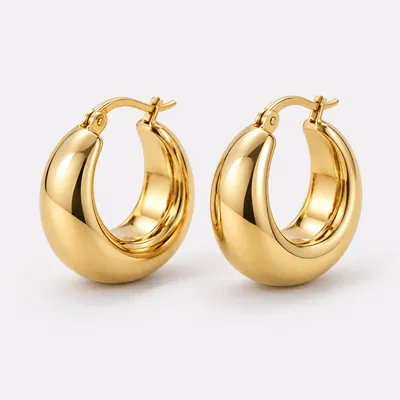
Types of Earring Backs: 10 Closures and Which to Choose

The main types of earring backs are push (butterfly) backs, screw backs and locking backs for studs; lever backs, latch backs and hinged hoops, which are built into the earring; fish hooks, which simply hang through the piercing; and clip-on mechanisms for ears without a piercing. Push backs are the most common and the easiest to use. Screw, locking, lever and latch backs hold more securely.
This guide explains how each closure works, which earring styles use it, and how to replace a back you’ve lost. For the earring styles themselves (studs, hoops, drops, climbers and more), see our guide to types of earrings. Both are part of our jewelry size guide.
Key Takeaways
- Push (butterfly) backs are on most studs. They are quick to use but can loosen over time, so check the grip now and then.
- Screw backs are among the most secure, but they only fit posts that are threaded.
- Lever backs, latch backs and hinged hoops are part of the earring, so there’s no separate back to lose.
- Heavy or large earrings need a back with more support, such as a wide disc back or a locking back.
- To replace a lost back, match it to the post: a smooth post takes a push back, a threaded post needs a screw back.
Earring backs at a glance
| Back type | How it closes | Usually found on | Security | Ease of use |
|---|---|---|---|---|
| Push (butterfly) back | Friction: curled tabs grip the post | Studs, light drops | Basic | Very easy |
| Bullet back | A small cylinder slides on, often lined with rubber | Small studs | Basic | Very easy |
| Screw back | Threads onto a threaded post | Studs | High | Slower |
| Locking (La Pousette) back | Squeeze the sides, slide on, release to lock | Studs, heavier earrings | High | Takes some practice |
| Flat back | Pin pushes into a flat disc behind the ear | Cartilage and new piercings | High | Fiddly |
| Lever back | A hinged lever snaps shut behind the lobe | Drops, dangles, small hoops | High | Easy |
| Latch back | A hinged post clicks into a notch | Hoops, drops | High | Easy |
| Hinged hoop (huggie) | Part of the hoop swings open and clicks closed | Huggies, small hoops | Good | Easy |
| Fish hook | Open wire hangs through the lobe | Drops, dangles | Basic; better with a stopper | Very easy |
| Clip-on | A hinged clip or screw presses on the lobe | Unpierced ears | Good | Easy |
Earring backs for studs
Push backs (butterfly or friction backs)
A push back is the small metal piece you slide onto a stud’s straight post. GIA’s bench guide describes these clutch, friction or butterfly backs as discs with curled tabs that act as springs to pinch the post, and the post usually has small notches where the tabs catch (GIA). They are cheap, small and easy to put on.
The downside is grip. As the tabs loosen, the back slides off more easily, which GIA notes creates “a very real risk of losing the earring.” If a push back slides on with no resistance, replace it.
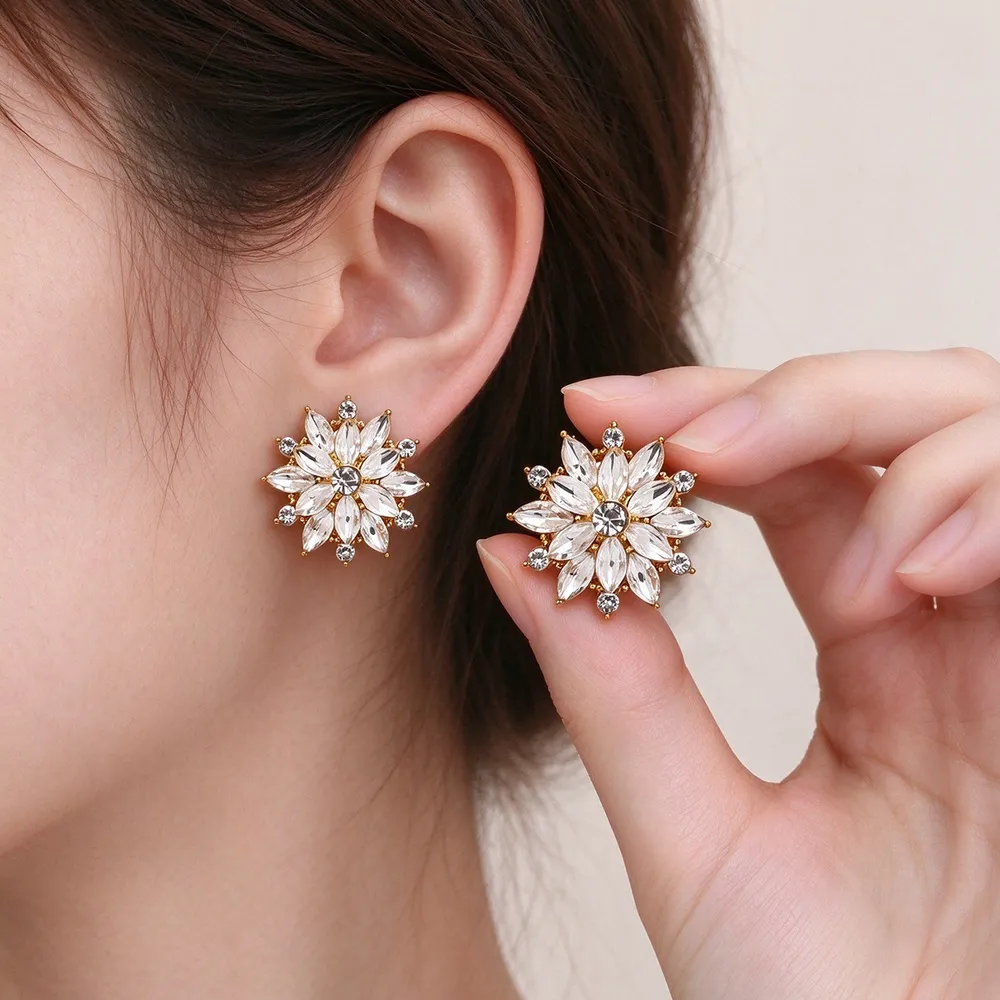
The rhinestone snowflake flower studs are a typical example: the side view in the listing’s photos shows a butterfly back on each post.
Bullet backs
A bullet back is a small cylinder that slides onto the post. Many are lined with soft rubber or silicone to grip better. Jewelers Mutual notes they are easy on and off but don’t suit heavy studs, which can tip forward without a wider back behind them (Jewelers Mutual).
Screw backs
A screw back threads onto the post like a nut. It is one of the most secure options, which is why it’s common on valuable studs. The catch: it only works with a threaded post, and it takes more twisting to put on and take off. The threads can wear down over time.
Locking backs (La Pousette)
A locking back looks like a flat disc. You squeeze two small tabs on the sides, slide the post through, then let go, and a spring locks it in place. Jewelers Mutual describes it as combining the security of a screw back with the ease of a push back, though the tabs can be hard to pinch if you have trouble with fine finger movements.
Flat backs
Flat backs are mostly used for new piercings and cartilage piercings such as the helix or tragus. A thin pin goes through from the front and pushes into a flat disc behind the ear, so nothing pokes your neck when you lie down. They often have to be fitted at a piercing studio.
Backs built into the earring
Some earrings have their closure built in, so there’s no separate back to drop on the bathroom floor.
Lever backs
A lever back has a curved ear wire that passes through the piercing, with a hinged lever that snaps shut behind the lobe. It’s a common closure for drops, dangles and small hoops. It holds well even when the earring swings.
Latch backs
A latch back has a hinged post (straight or curved) that goes through the ear and clicks into a small notch on the earring, like a gate latch. You’ll see latch backs on hoops and on heavier drops.
Hinged hoops and huggies
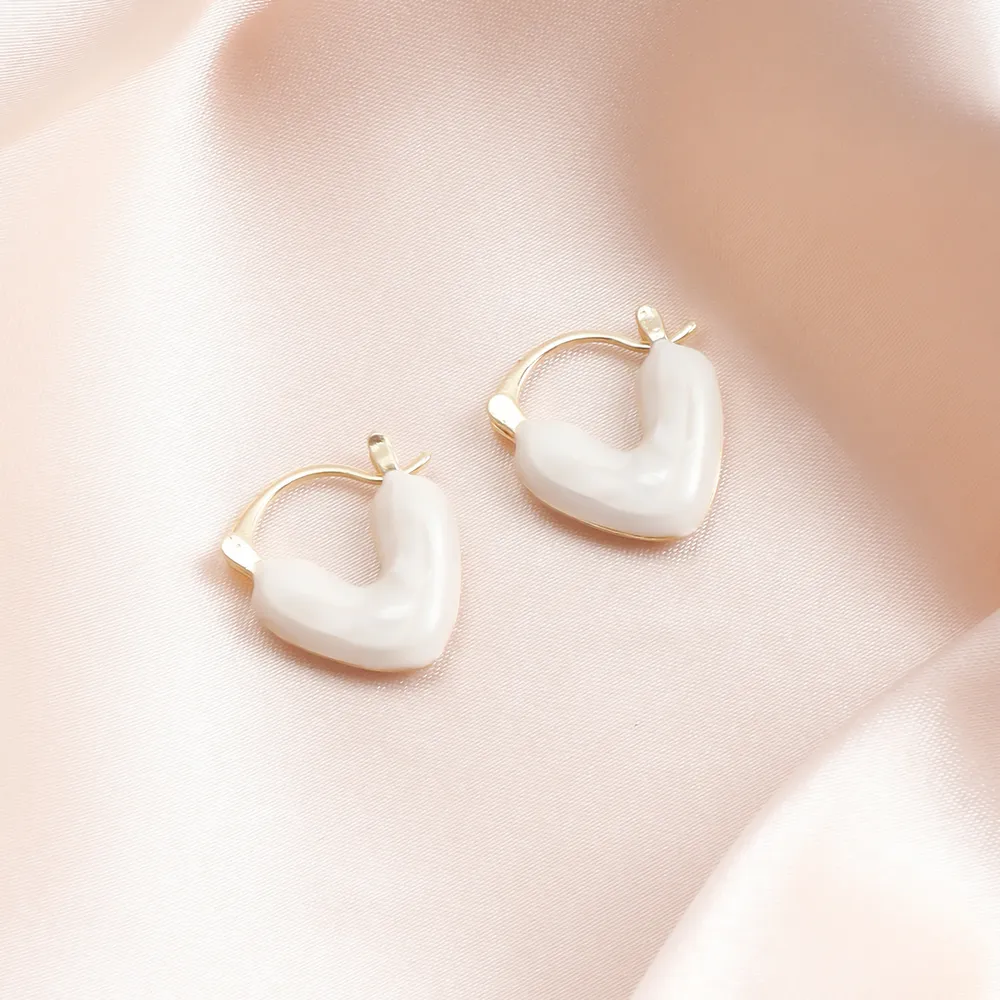
Most huggies and small hoops close with a hinge: one section of the hoop swings open, goes through the piercing and clicks shut. The V-shape heart huggie hoops are an example; as the listing says, “the gold-tone hinge closes behind the lobe.” Browse more hoop earrings.
Omega backs (French clips)
An omega back has a hinged loop shaped like the Greek letter Ω that folds down over the post and rests against the back of the lobe. It supports larger, heavier earrings, but it is bulkier and can pinch.
Fish hooks and stoppers
A fish hook (also called a French hook) is an open, curved wire that passes through the lobe and hangs down behind it. There’s no lock, so a fish hook stays in by its shape and the weight of the earring.
To keep a fish hook from slipping out, add a small rubber or silicone stopper to the end of the wire behind the lobe. Clear stoppers are cheap and barely noticeable, but Jewelers Mutual notes they wear out quickly and turn yellow after a while, so replace them now and then.
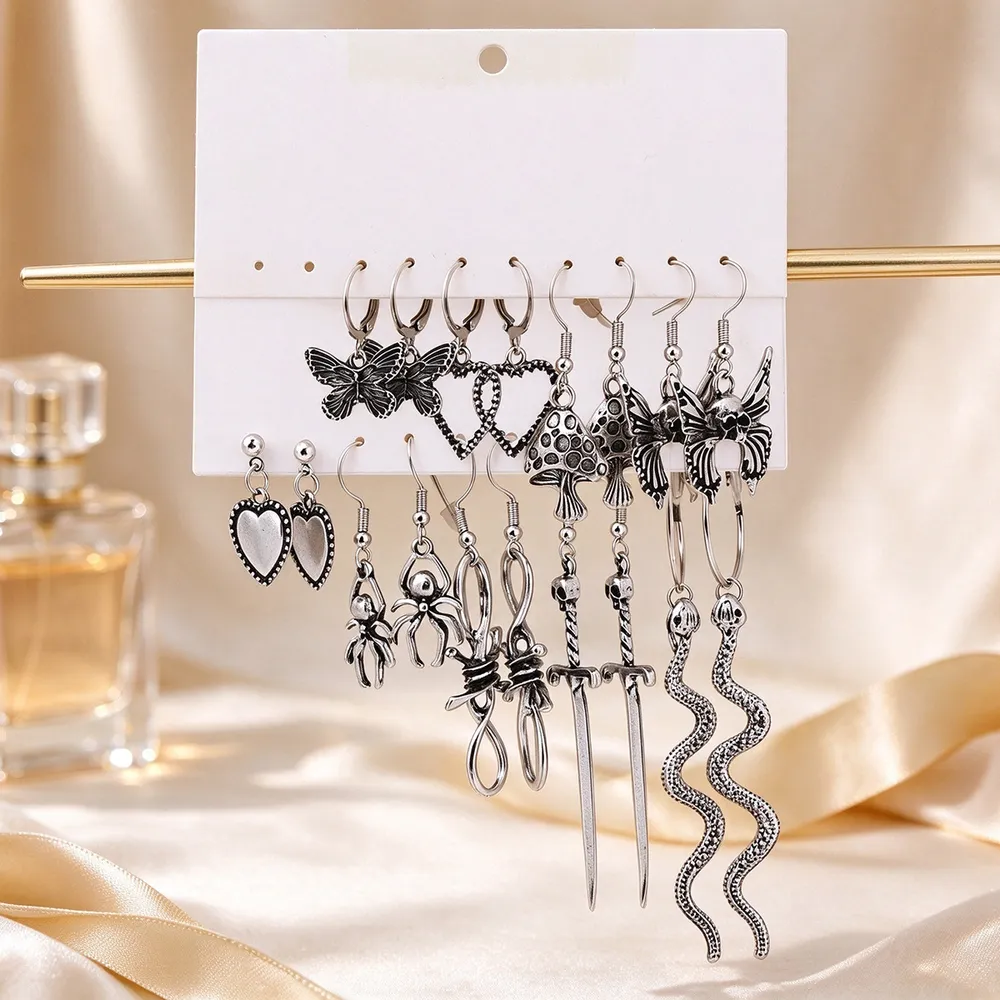
The heart, butterfly and mushroom earring set shown at the top of this guide mixes three closures on one card: small hoops, fish hook drops and heart drops on ball-stud posts. Browse more drop and dangle earrings.
Clip-on mechanisms
Clip-on earrings don’t go through the ear. A hinged clip presses a pad against the back of the lobe, or a small screw tightens until the earring feels secure. Screw clips let you adjust the pressure; hinged clips are faster. Either way, wear a new pair for short periods first until you know how it feels. We cover how they’re worn in our guide to types of earrings, and you can browse clip-on earrings and ear cuffs.
Backs for heavy earrings
Big drops, chandeliers and wide studs need support, or they tip forward and pull on the lobe.
- Wide disc backs (sometimes called monster or jumbo backs) are push backs with a bigger disc that keeps the earring upright.
- Comfort clutch backs put a bullet back inside a clear plastic disc to spread the weight.
- Locking backs hold the earring firmly in place.
Jewelers Mutual’s guide suggests that studs generally pair with push or screw backs, while heavier dangles may do better with lever backs or wide disc backs.
Which earring back is most secure?
For studs, screw backs and locking backs are the most secure. For drops and hoops, lever backs, latch backs and hinges hold far better than open fish hooks. Push backs are the least secure of the common types, mainly because they loosen with use.
Comfort matters too. Large discs and omega backs can press on the lobe, while flat backs and small bullet backs sit flatter. If you sleep in earrings, a flat back pokes the least.
How to replace a lost earring back
- Look at the post. If it’s smooth, any push back of the right size fits. If you can see fine spiral grooves, it’s threaded and needs a screw back of the same size.
- Check the thickness. Posts are commonly 20G (0.8 mm) or 18G (1.0 mm), as our jewelry size guide explains. A back made for a thicker post will feel loose on a thin one.
- Pick the style. Use a standard butterfly back for everyday studs, a wide disc back for heavy studs, or a silicone stopper for a fish hook.
- Test the grip. The new back should take a little effort to slide on and should not slip down the post when you tug gently.
- Keep spares. Spare backs are inexpensive and easy to lose, so keep a few in a small bag with your earrings.
If a hinge, lever or latch is bent or no longer clicks shut, don’t force it. Built-in closures are hard to fix at home, so take the earring to a jeweler or replace it.
From Lumi: When I write up an earring, I look for how it fastens in the photos before anything else, because a listing often doesn’t say. As of October 2026, among our 103 earring listings, only one description says in words how a pierced earring fastens (a hinge). So I check the side and back views, and if I can’t see the back, I don’t guess what it is.
Frequently asked questions
What are the most common earring backs?
Push backs, also called butterfly or friction backs. They come on most studs because they are cheap, small and quick to use.
What earring backs are best for sleeping?
Flat backs, because they sit flat against the skin behind the ear. Push backs and large discs can poke into your neck when you lie on your side.
Do earring backs fit all earrings?
No. Push backs fit most smooth posts, but screw backs only fit threaded posts, and a back made for a thicker post can be loose on a thinner one. Lever backs, latch backs and hinged hoops have their closure built in and don’t take a separate back.
How do I keep my earrings from falling out?
Replace loose push backs, add a silicone stopper to fish hooks, and choose screw backs, locking backs, lever backs or hinged hoops for earrings you can’t bear to lose. Cleaning helps as well, because residue in a butterfly back weakens the grip. Our guide on how to clean earrings covers posts, backs and hinges.
Choose the back that fits your day
Push backs are fine for light everyday studs; screw, locking, lever and latch backs and hinged hoops are better for busy days or earrings you’d hate to lose. Check how an earring fastens before you buy, then browse our stud earrings or all earrings by style.