Pre-Layered Necklaces vs Separate Sets: A Buying Guide

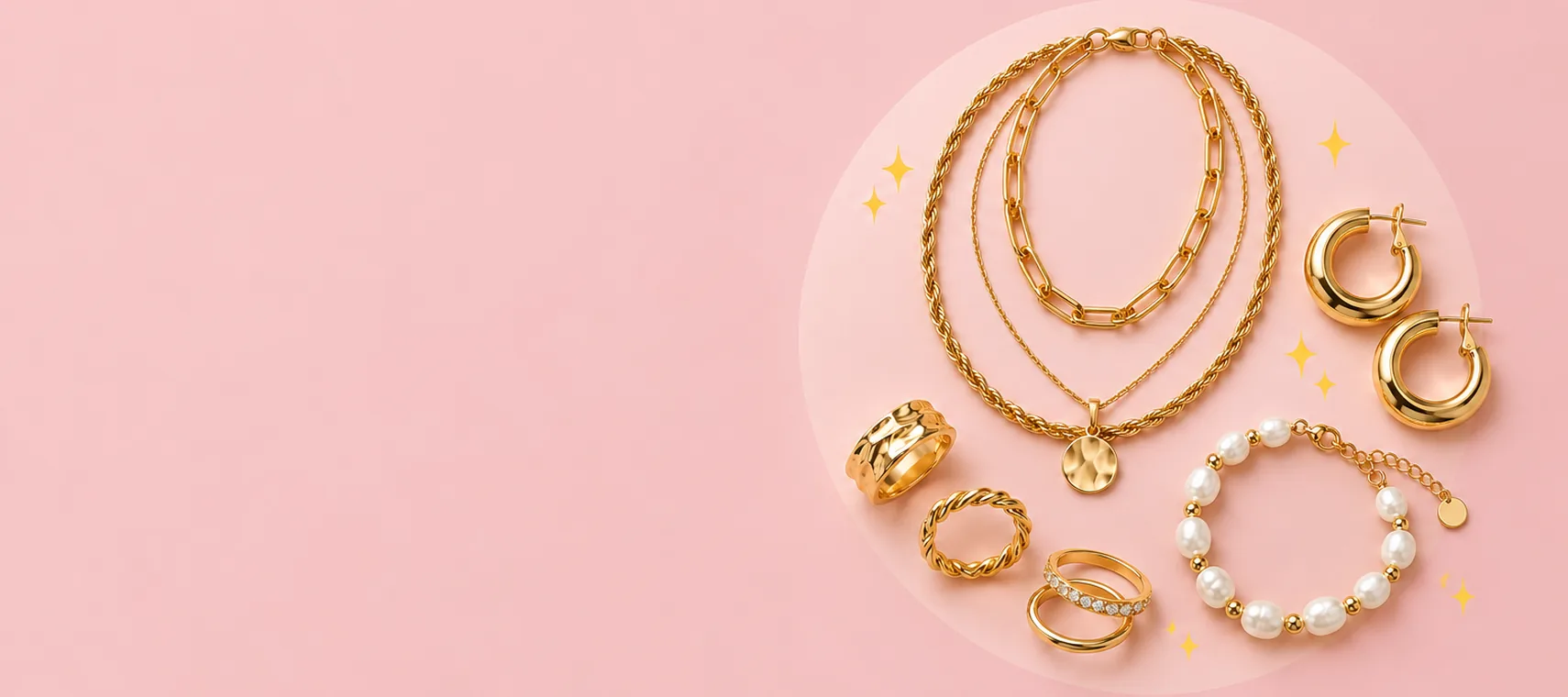
A pre-layered necklace gives you a ready-made layered look as one listed necklace. A separate necklace set contains individual necklaces that can be worn apart. The difference is what you receive and how the pieces fasten, not how many strands appear in a photograph. Before ordering, check the piece count, the closure and whether each layer can be removed.
A title such as “double layer” describes the appearance. It does not, by itself, promise two separate necklaces. This guide explains how to read those descriptions, compare the options and ask the right question when a listing leaves something unclear.
Key Takeaways
– Count wearable pieces, not visible strands. A layered design can be sold as one necklace.
– Check whether the listing confirms removable layers and independent clasps. A front-view image cannot answer everything.
– Choose a pre-layered design when you want the pictured combination, or confirmed separate necklaces when mixing and matching matters most.
– Read material details separately from color descriptions. Gold-colored does not establish gold content.
What is a pre-layered necklace?
A pre-layered necklace is a necklace presented as a ready-made arrangement of multiple strands or levels. In this guide, the term describes the ready-made look; it does not establish a specific clasp design. Some designs share a closure, while other products may use a different arrangement. The listing or seller should confirm the fastening on the actual item.
A separate necklace set is a group of individual necklaces supplied together, each wearable on its own. A listing should state how many pieces are included and whether each can be worn alone. If it only says “layered necklace,” do not silently substitute that stronger promise.
Think of three separate questions: how many levels you see, how many wearable necklaces are included, and how those necklaces close. A product can answer the first question clearly while leaving the other two unresolved.
Compare the options before you buy
| Buying question | Pre-layered necklace | Confirmed separate necklace set |
|---|---|---|
| What are you choosing? | A ready-made layered design | Individual necklaces packaged together |
| Can you wear just one layer? | Only if the design is confirmed removable | Yes, if each included necklace is wearable on its own |
| Can you change the combination? | Depends on the construction | You can choose which pieces to wear together |
| How many clasps are there? | Check the actual product; do not infer it from the name | Check how each necklace fastens |
| Can every layer be adjusted? | An extender may affect the whole piece rather than each strand | Depends on the length and extender of each necklace |
| Will it avoid tangles? | No guarantee | No guarantee; separate chains also need careful storage |
| Who might prefer it? | Someone who wants the listed combination | Someone who wants to vary the combination |
These descriptions are selection criteria, not a claim that one format is always better. A ready-made necklace can be exactly what you want for a familiar neckline. Independent pieces make more sense when you want to wear a short chain alone one day and add a pendant the next.
What four real product listings tell us
We compared four published product records in the Dazzlot catalog on October 22, 2026. The research method was a small catalog review: record the title, description, listed material and Pieces field. It was not a wear test, a clasp inspection or a representative survey of all layered necklaces.
All four records listed 1 necklace. None of the reviewed descriptions confirmed that its layers could be detached and worn as separate necklaces. That absence does not prove the layers are permanently joined; it means wearing each layer on its own needs confirmation before you buy.
| Catalog example | What the description establishes | Listed quantity | What remains to confirm |
|---|---|---|---|
| Double Layer Faux Pearl and Metal Ball Necklace | A faux-pearl strand and a metal-ball strand arranged together | 1 necklace | Closure layout and whether the strands detach |
| Layered Coin Disc and Leaf Long Necklace | Coin discs and leaves positioned at different heights | 1 necklace | Whether any layer can be worn independently |
| Multi-Layer Heart Charm Necklace | Heart charms across several fine strands | 1 necklace | Independent clasps, removable layers and adjustment |
| Gold or Silver Double Layer Heart Necklace with Faux Pearls | A heart pendant and faux-pearl strand in a gold- or silver-colored option | 1 necklace | Actual fastening and detachable construction |
The useful distinction is between a confirmed product feature and an assumption. “One necklace with several strands” is supported by these records. “Several separate necklaces for the same price” is not.
Faux pearls and metal balls: a ready-made texture contrast
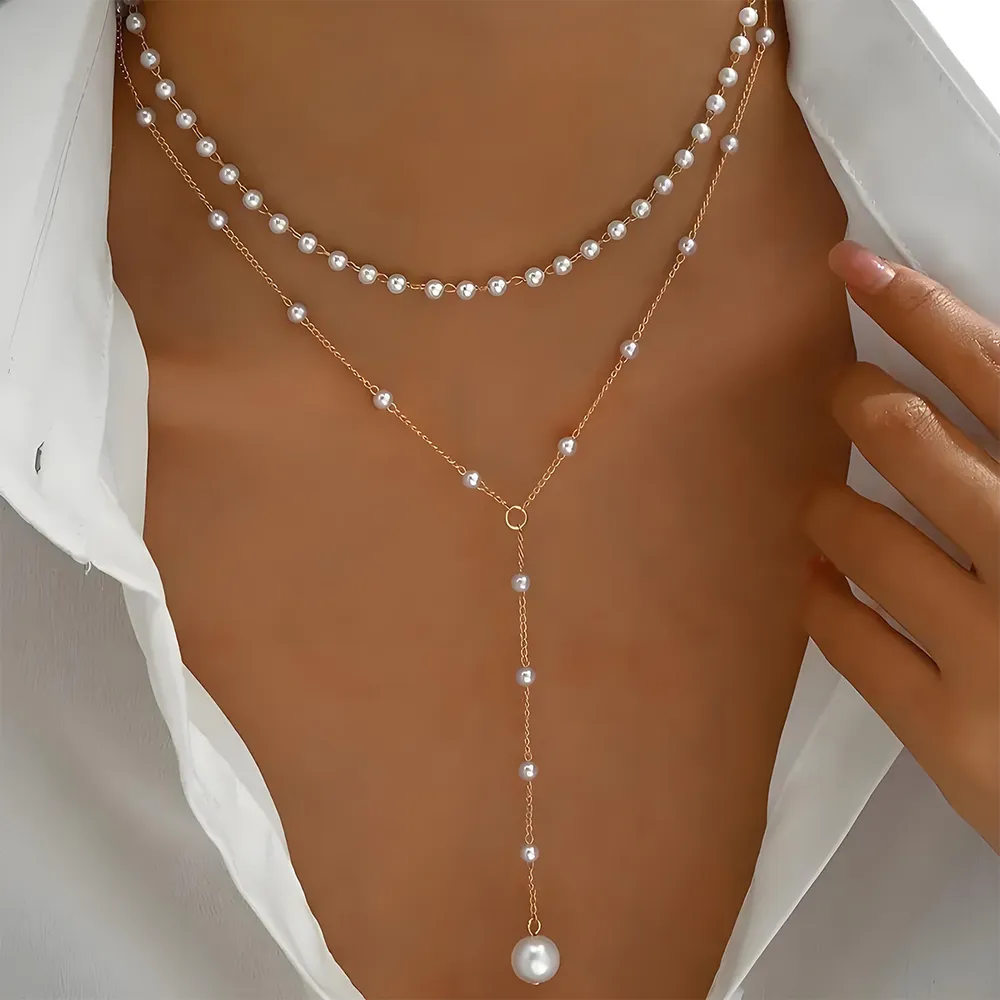
The Double Layer Faux Pearl and Metal Ball Necklace is described as one faux-pearl strand and one strand of polished metal balls, already layered together. The material field says alloy, and the Pieces field says one necklace.
This is an example of choosing a ready-made mix of textures. If you want to wear only the faux-pearl strand, ask whether it detaches. The product listing alone does not show that option. The photograph illustrates the design; it is not evidence of a detachable clasp.
Coins and leaves: count the necklace, not the pendants
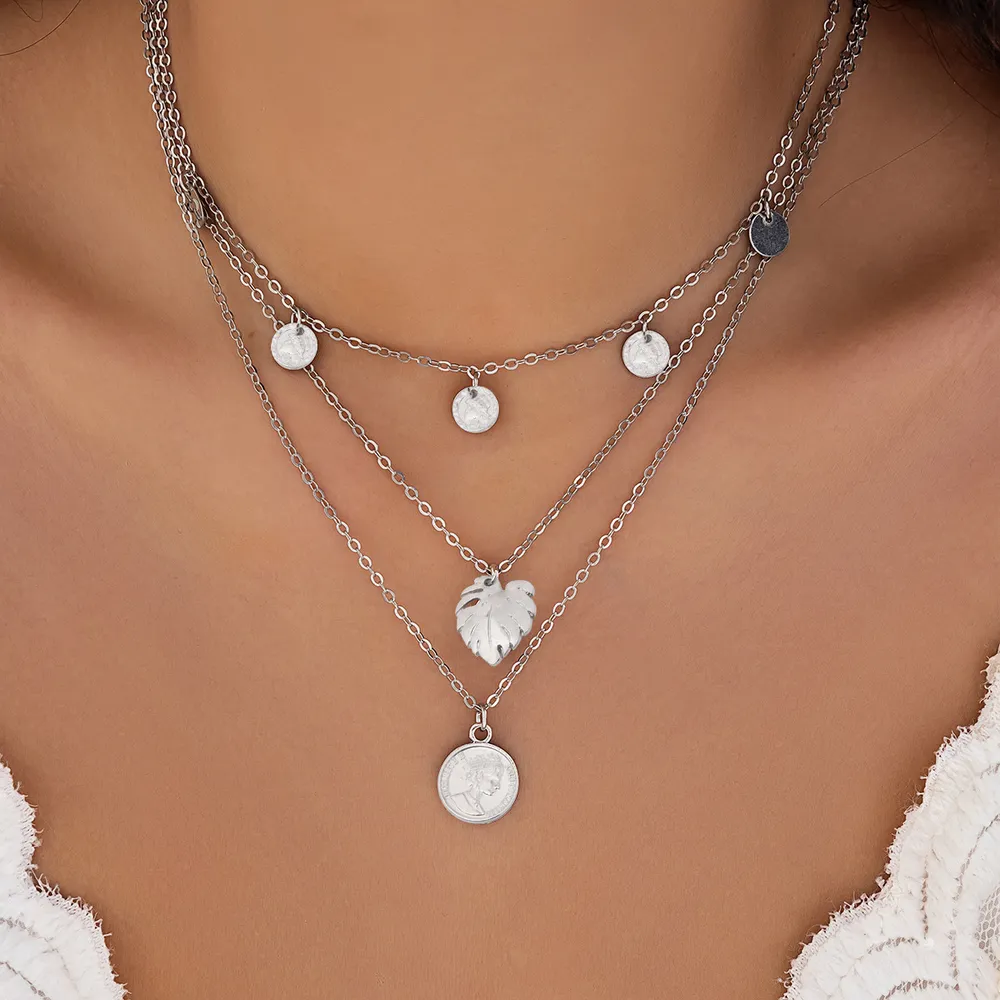
The Layered Coin Disc and Leaf Long Necklace uses coin and leaf details at different heights. The record still lists one necklace. Several pendant positions are not a reliable way to count independent wearable pieces.
For example, a shopper wanting a longer ready-made accent over a plain sweater might choose the overall design. A shopper wanting to remove a particular strand should confirm the construction instead. Those are different buying needs, even when the same photograph appeals to both shoppers.
Heart charms: color and construction are separate choices
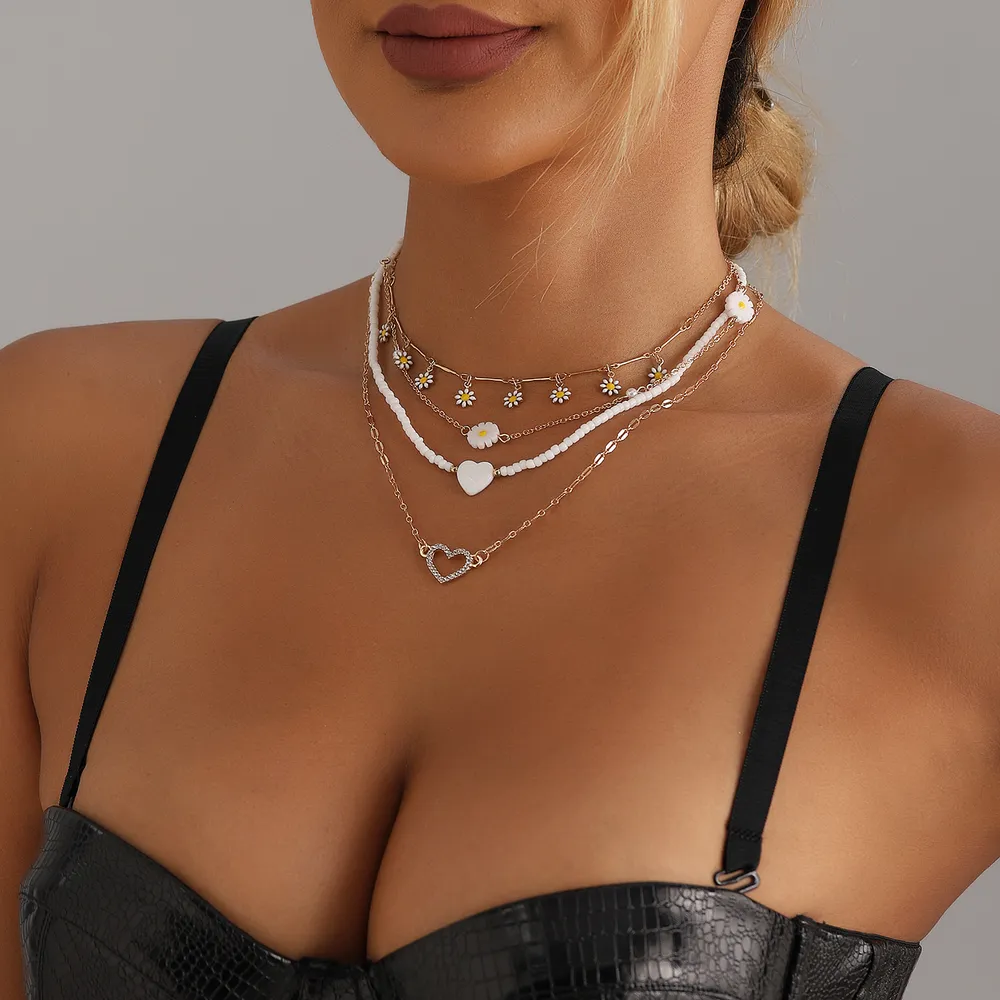
The Multi-Layer Heart Charm Necklace is listed as alloy with a gold-colored appearance and one necklace. Its several fine strands explain the layered look, but they do not establish several separately adjustable chains.
The fourth catalog example, Gold or Silver Double Layer Heart Necklace with Faux Pearls, also lists one necklace. Choosing a color variation is a separate decision from choosing how many wearable necklaces you receive.
A small-order example
If a listing says 1 necklace, buying two units means two of that listed necklace. It does not mean that every strand becomes a separate item. For a small shop, write the item count and the layer count in separate columns on your order sheet. That helps you compare stock without turning a two-layer design into a claim of two standalone necklaces.
This example follows the quantity fields in the four records above. It is an ordering check, not a promise about their clasps or a claim about other suppliers.
A practical check for clasps, lengths and materials
Work through the listing in this order. It is quicker than trying to reconstruct a fastening from a styled front-view photograph.
- Read the quantity field. Look for “1 necklace,” “2 necklaces” or an explicit description of separate pieces. If the title and quantity appear inconsistent, ask before paying.
- Check closure photographs. Look for a clear view of the back or fastening. A visible clasp is helpful, but an incomplete image should not be treated as proof that no other fastenings exist.
- Confirm wearing each layer on its own. Ask whether each layer is removable and wearable by itself. The number of hooks or extenders is not always enough to answer that question.
- Check the stated lengths. Confirm which measurement belongs to which strand. An overall measurement may not explain where every level will sit. Use our necklace length guide to plan the placement you want.
- Read materials separately. Check the base material and any stated coating or stone details. Do not translate a color name into a metal-content claim.
The FTC’s guide to buying platinum, gold and silver jewelry explains how karat and other descriptions communicate metal content. It does not verify these fashion-jewelry products. Use the actual material details. Gold-colored alloy is not a promise of solid gold, gold-filled metal or a set plating thickness.
Choose for the outfits you already wear
Choose a pre-layered design when the photographed combination is the combination you want. Before ordering, consider its overall outline, the placement of pendants and whether the listed lengths suit your neckline. Do not assume a shared adjustment changes the spacing between every strand.
Choose confirmed separate necklaces when independent styling matters more. For example, you might want to wear one plain chain at work and combine it with another necklace later. Check the individual lengths and closures rather than assuming every item in a set adjusts in the same way.
Store the pieces without promising a tangle-free result
Keep separate necklaces separated during storage rather than dropping them together into one compartment. GIA’s jewelry organization guide recommends multiple compartments to help prevent necklaces tangling and finishes scratching. Its advice supports separating pieces; it does not prove that a particular clasp design prevents tangles during wear.
For travel, GIA’s jewelry care guidance recommends protecting pieces in a separate box or case. Use that general packing principle without applying gemstone-cleaning advice indiscriminately to alloy, glued or faux-pearl pieces. A ready-made layered necklace still needs care even when its strands are sold as one item.
Questions to ask before ordering
Does double layer mean two necklaces?
No. It can describe two visible levels within one listed necklace. Check the quantity field and whether each layer can be worn on its own. In the four catalog records reviewed here, the listed quantity was one necklace in each case.
Is a separate set always easier to adjust?
Not necessarily. Independent necklaces give you separate pieces to work with, but each may have a fixed length or a different extender. Confirm the actual measurements and adjustment before deciding which format is more useful.
Is a pre-layered necklace guaranteed not to tangle?
The term is not a tangle-free promise. Length, design, movement and storage can affect how chains behave. We did not test tangling, so we do not rank one type as less likely to tangle.
What should I ask if the listing is unclear?
Send a specific question: “Is this one necklace or several separate necklaces? Can each layer be detached and worn alone? Could you show the closure and confirm each strand’s length?” That gives the seller a clear feature to verify instead of asking only whether the item is a set.
About the author and editorial method
Lumi Chen writes the store’s guides to fashion jewelry, materials and styling. This article combines a dated review of four product records with the FTC and GIA sources linked above. The catalog examples are sold by Dazzlot; selecting them is not an independent product endorsement. No physical wear or clasp test was performed for this article.
The header is an existing store illustration; the inline pictures are catalog product photographs. They are not new test images. For a product question or correction, contact us.