What Does 18K Gold Plated Mean? Karat, Thickness and Labels

“18K gold plated” means a piece made of another metal, usually brass or copper, with a thin coating of 18 karat gold on the surface. The 18K describes only the coating: that layer is 75% gold. It tells you nothing about how thick the gold is or what metal is underneath, and those two things decide how long the color lasts.
This guide explains what the karat number means, what the label leaves out, how US rules from the Federal Trade Commission treat plated gold markings, and how to make 18K plated jewelry last. If you are comparing plated with thicker options, see gold vermeil vs gold plated and gold plated vs gold filled.
Key Takeaways
- 18K means 18 parts gold out of 24, or 75% gold. In “18K gold plated,” that applies to the coating only.
- An 18K gold plated piece is not 18K gold jewelry. The base is another metal.
- Thickness and base metal matter more than karat for how long the color lasts.
- Under the FTC guides, gold electroplate must be at least 10K and at least 0.175 microns of fine gold equivalent. For an 18K layer that works out to about 0.23 microns.
- Look for a thickness in microns, a named base metal, or marks like HGE, GF or vermeil, which promise more gold.
What does 18K mean?
Karat measures gold purity on a scale of 24 parts. Pure gold is 24K; 18K gold is 18 parts gold and 6 parts other metals, which is 75% gold. Blue Nile’s May 2026 karat guide lists the gold content and color of each common grade (Blue Nile), and Brilliant Earth’s guide to jewelry stamps gives the matching fineness marks (Brilliant Earth):
| Karat | Gold content | Also stamped | Color |
|---|---|---|---|
| 24K | 99.9% | 999 | Bright, intense yellow |
| 18K | 75% | 750 | Rich yellow with deep luster |
| 14K | 58.3% | 585 | Balanced, classic tone |
| 10K | 41.7% | 417 | Pale yellow with subtle warmth |
In solid jewelry, a higher karat means more gold, a deeper yellow and a softer metal. In plating, the karat mainly sets the color of the surface. An 18K layer looks warmer and more yellow than a 10K or 14K layer, which is why “18K” is a popular plating choice for fashion jewelry.
What “18K gold plated” tells you, and what it doesn’t
The label tells you two things:
- There is real gold on the surface.
- That gold is 18 karat, or 75% pure.
It does not tell you:
- How thick the gold is. A layer of a fraction of a micron and a layer of several microns can both be called 18K gold plated. Thickness is what decides how long the color survives everyday rubbing.
- What the base metal is. Blue Nile describes standard gold plated jewelry as typically using “less expensive base metals such as brass or copper,” with gold coatings “often under 0.5 microns” (Blue Nile). The base also determines what you’ll see, and what touches your skin, once the gold thins.
- How the gold was applied. Most plating is electroplating, but the term “gold plate” can also describe a gold layer bonded mechanically, which is a different (and usually thicker) product.
So a “14K gold plated” piece with a thick coat over a good base can outlast an “18K gold plated” piece with a thin coat. Higher karat does not mean more gold on the piece.
There is also a small twist in the US rules. The FTC measures plating thickness in fine gold equivalent: its guides treat 1 micron of 12K gold as half a micron of 24K gold (16 CFR § 23.3, footnote 31). Because 18K is 75% gold, an 18K layer has to be about 0.23 microns thick to meet the 0.175-micron minimum for “gold electroplate,” and about 3.3 microns to reach the 2.5-micron “heavy gold electroplate” level.
What the FTC guides say about marking plated gold
The FTC’s Guides for the Jewelry, Precious Metals, and Pewter Industries set out how gold claims should be worded in the US (16 CFR § 23.3). The points that matter for an “18K gold plated” label:
- “Gold” on its own means solid 24K. Using “gold” without qualification for anything that isn’t 24K throughout may be misleading.
- Plated pieces must say so. If a product is only surface-plated, the word “gold” has to be qualified to show that.
- The karat goes first, at equal size. “Gold plated” and “gold electroplate” should be immediately preceded by the karat of the plating, as conspicuous as the term itself. The guides’ own example is “12K G.E.P.”
- Minimums for electroplate. To be marked gold plated or gold electroplate, electroplating should be at least 10 karat and at least 0.175 microns of fine gold equivalent on all significant surfaces. “Heavy gold electroplate” needs at least 2.5 microns.
- Hidden layers must be disclosed. If a gold layer has been covered with a base metal such as nickel and then given a thin gold wash, that has to be disclosed.
By that logic, “18K GP” or “18K gold plated” is the expected format, and “18K gold” on a plated piece would leave out the most important word.
Common labels and what they mean
| Label | What it means (US) | Gold layer |
|---|---|---|
| 18K GP / 18K gold plated | 18K gold plating over another metal | Not stated unless the seller adds it; FTC electroplate minimum 0.175 microns |
| 18K GEP / gold electroplate | Same, naming the electroplating process | At least 0.175 microns, 10K+ |
| HGE / heavy gold electroplate | Thicker electroplate | At least 2.5 microns, 10K+ |
| GF / 1/20 14K GF | Gold filled: gold bonded mechanically | At least 1/20 of the metal weight, 10K+ |
| RGP / rolled gold plate | Mechanically bonded gold, less than gold filled | Shown as a fraction, e.g. 1/40 |
| Vermeil | Gold over sterling silver | At least 2.5 microns, 10K+ (16 CFR § 23.4) |
| 18K / 750 alone | Solid 18K gold | Gold all the way through |
| Gold-tone / gold color | A color description | No gold claimed |
Small pieces such as earrings often have no room for a stamp, so the listing text matters more than the metal itself. For a full comparison of gold filled and plated, see our gold plated vs gold filled guide.
How long does 18K gold plating last?
It depends on the thickness, the base and how you wear it, not on the karat. Blue Nile’s guide says gold plated and vermeil jewelry “typically last from several months to a few years, depending on how often they’re worn and how well they’re cared for” (Blue Nile).
Wear shows first wherever the piece rubs: the inside of a bangle or cuff, ring backs, clasps and earring hooks. Sweat, water, lotion and perfume all speed it up. For what happens when the plating wears through and the base shows, see does gold plated jewelry tarnish.
How to care for 18K gold plated jewelry
Care is about protecting a thin surface layer. Blue Nile’s care tips for plated pieces include:
- Take it off before showering, swimming, exercising or anything that makes you sweat heavily.
- Put on lotion, perfume and sunscreen first, then your jewelry.
- Wipe it gently with a soft, non-abrasive cloth after wearing.
- Store each piece separately in a dry pouch or box so pieces don’t scratch each other.
- Skip ultrasonic cleaners, steam cleaning and liquid jewelry cleaning solutions.
The same routine works for gold-tone fashion jewelry. For step-by-step cleaning, see how to clean earrings.
What we say about our own jewelry
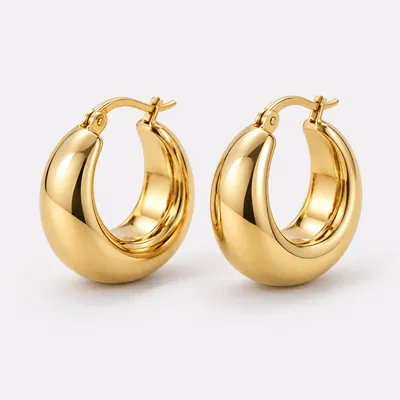
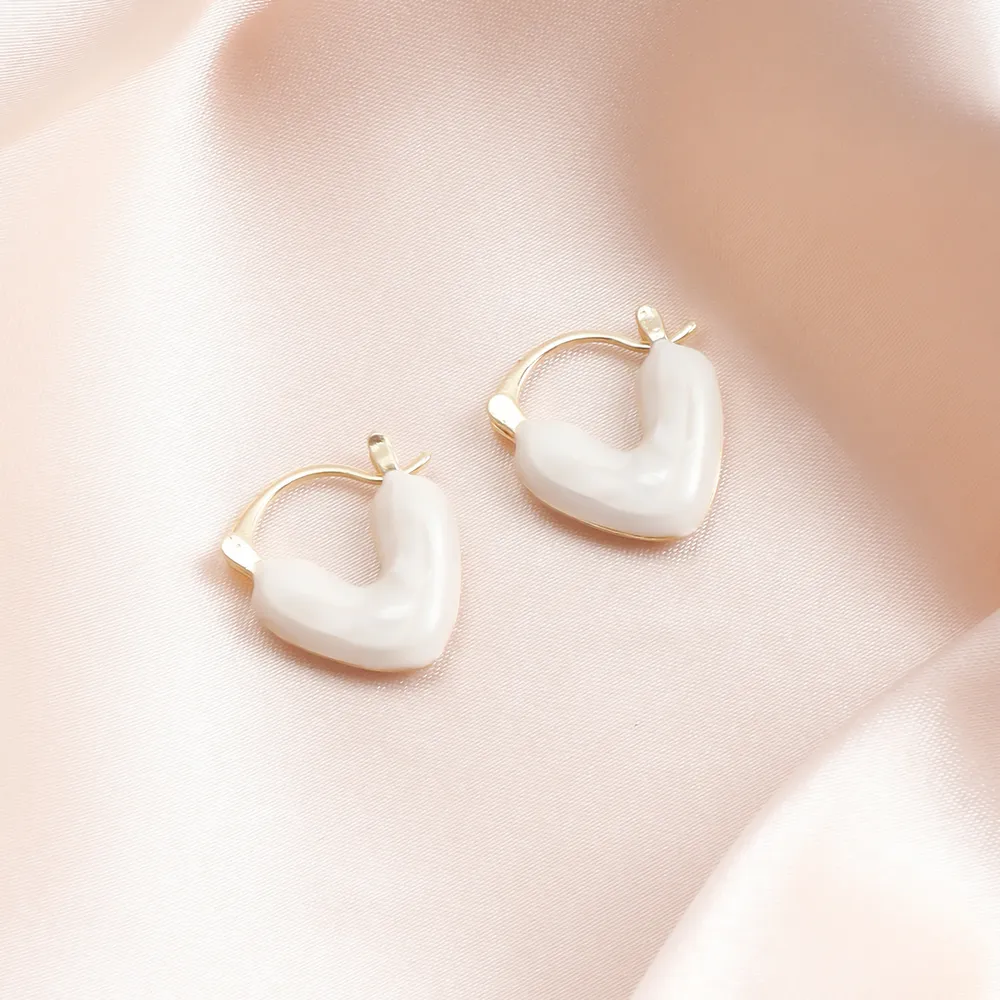
We checked our own catalog before writing this. As of October 2026, none of our 1,037 published products mentions “18K” in its title, description or attributes, and none is described as plated or vermeil. 932 of the 1,037 list alloy as their material, and 488 are offered in a color listed as “Gold.” So we describe those pieces as gold tone, like the V-shape heart huggie hoop earrings in the cover photo, which have a gold-tone hinge.
From Lumi: I only write a karat when a product page or supplier spec actually states it. If all I can confirm is the color, I write “gold tone.” A karat number on a listing should be something you can rely on, not a decoration.
Frequently asked questions
Is 18K gold plated real gold?
The surface layer is real 18K gold, but the piece is not. Underneath is another metal, usually brass or copper. That is different from “18K gold” or a “750” stamp, which mean solid 18K gold.
Is 18K gold plated better than 14K gold plated?
Not necessarily. 18K plating has a deeper yellow color, but durability depends on thickness and the base metal. A thicker 14K layer can outlast a thinner 18K one.
Does 18K gold plated jewelry tarnish?
The gold layer doesn’t tarnish, but it wears thin. As it does, the base metal underneath can darken or discolor. Keeping the piece dry and stored separately slows this down.
Can you shower with 18K gold plated jewelry?
It’s best not to. Water, soap and friction wear the thin gold layer faster, so take it off first.
What does “18K GP” stamped on jewelry mean?
18K gold plated: a surface layer of 18 karat gold over a different metal. “18K HGE” means heavy gold electroplate, a thicker layer of at least 2.5 microns under the FTC guides.
The bottom line
“18K gold plated” tells you the color and purity of a thin gold coat, not how much gold the piece has. Before you pay extra for the 18K, ask about thickness and the base metal, or look for HGE, gold filled or vermeil if you want the color to last. If you just want the look, gold-tone fashion jewelry costs less and needs the same care. Browse our hoop earrings, necklaces and bangles and cuffs in gold and silver tones.